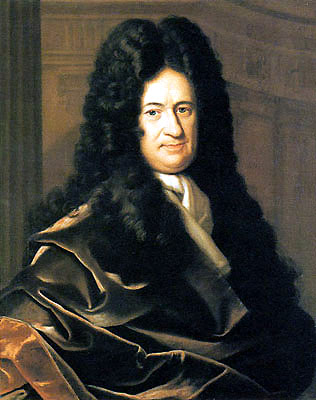
Got into a name thing with a Facebook friend (Iggy Antiochus if you gotta know) and decided to post about it.
The English name Terence comes from the Roman playwright Terentius. It wasn't my birth first name, Douglas is, but I got it when adopted at about six months old. Well hell, it wasn't Terentius' birth name either, how about that. Wasn't even his first name, ever! Hell he wasn't even Roman!
Here's the deal. My namesake was born around 185 or 195 BC, in or around Carthage, or else to a woman in Greek speaking Italy (yeah, they spoke more Greek than Latin in Rome back then, it was the cultural language) who was sold into slavery in or around Carthage. He himself was sold as a slave to a Roman senator named Publius Terentius Lucanus, who brought him to Rome, gave him an education, and then, apparently impressed with the result, freed him.
OK Romans had three names. First comes the praenomen, which means your first name, or given name as it is called. Second comes the nomen, aka the nomen gentile or sometimes the gentilicium, which by whichever designated the clan, or gens, from which one came. Third and last comes the cognomen, which designates your family within the clan. This structure is even older than the Romans, who got it from the Etruscans before them.
But that's Romans, not slaves or kids of slaves who become slaves themselves. Nobody knows what Terentius' birth name was, but it wasn't Terence, sure as hell. His name reflects his status as a Roman citizen, upon being freed. So he took the praenomen Publius, meaning "public", which was one of the relatively few first names, which was also his former master's first name, and took the clan name of his master, Terentius, and for a last name to distinguish his family within the clan, took Afer, since he was not a blood Terentius but from Afer.
Afer, what the hell is that, sounds like Africa. Yeah it does and for good reason. Africa now means the whole continent, but in Terence' lifetime it meant the land of the Libyan tribe the Afri, who hung in and around Carthage, in modern Tunisia but which was founded as a Phoenician colony in 814 BC, or so the Romans said. But when the Romans trashed Carthage in 146 BC, by which time Terence had been dead several years, the Carthaginians themselves were called Punic, a reference to Carthage's Phoenician origin, and Afri came to mean the Libyan Berbers around them.
So hard telling. He may have been a Berber, although that use of Afri is just a little later than his lifetime, or he may have been Afri, who according to Flavius Josephus, the great Roman historian, were descendants of Abraham's grandson Epher, hence the name, or he may have been none of the above and who knows what, since when you're a slave you don't get a hell of a lot of choice about where you end up.
Afer as a Roman cognomen meant people who whatever else were from in or around Carthage, but doesn't clarify whether he was from there originally, and if so was he Afri or something else, or was something else and got brought there.
So we got a guy whose birth name and people are not known, who was sold as a slave but treated well and educated, and when freed took his former master's praenomen or given name, his clan name, within which he was distinguished by his Cathaginian/Tunisian origins at least with regard to the Roman world.
Now, when I was adopted, my new mom wanted to name me Cornelius Steven, but my new dad wanted Terence James. Dad won. Which is unusual twice over. For one thing generally moms get naming rights, and for another the usual RC practice in those days was to name a kid after one of the saints. So here's my dad naming me after a pagan Roman playwright and the RCC took it, so I was baptised at Holy Name By God Cathedral in Chicago.
My adoptive parents were of Irish-American stock, which completes both the irony and the fittingness of the name Terence for me. I learned later, from seeing the adoption papers among my parents' stuff after they died, my original name. Douglas John, and the last name, Clutterham, is English, from the Suffolk area specifically, making me an Angle by descent.
So I get a first name from a guy whose first name it wasn't! Which is OK, you don't hear Publius much these days. And neither that Terence nor this one started out with the name, or came from the people who gave him that name (he wasn't Roman and I ain't Irish), but got names that look like it by, as they say in insurance, major life event. He by being freed from slavery and made a Roman, me by being adopted. I doubt Dad was thinking of all that, but he did know the correct spelling to give me, which, the original being Terentius, is Terence. No double damn r.
It's all good. Later in life, when I fell in with the Puerto Rican student community at university and they, saying I thought like them (which is crap English btw, should be, thought as they), culturally adopted me, so to speak, well, there ain't no Terence in Spanish, so I was dubbed with an honorific neologism, El Teraco.
And totally in tune with what was to come, namely, the great gift of the Christian faith, as revealed in Scripture and accurately confessed in the Book of Concord. Luther admired the plays of Terence and quoted them a lot, and thought they were good for kids to learn in their educational formation.
Ain't that a kick? My first Lutheran pastor once said -- not sure if he was joking or not -- that my growing up in Minnesota and going to a Bavarian Benedictine founded school and picking up German and the whole German thing was God's way of getting me to be ready to be Lutheran, so I could lapse into German when ranting. But right there at the RC baptismal font, I was given the name of a Roman playwright Luther admired!
15 September 2010

06 September 2010
6 September. Happy Sorta Birthday, Western Catholic Church.
Nah, 6 September is not the birthday of the Catholic Church. 27 February 380 is. It just took 14 years for resistance in the Western Empire to be crushed militarily, which happened 6 September 394, so it's kind of like a birthday for the Western Roman Imperial Church.
Huh?
On 6 September 394 the Eastern Emperor Theodosius I defeated the Western Emperor Eugenius at the conclusion of the two-day Battle of The Frigidus.
Judas H Priest, never heard of it and why should I have heard of it, and where and what in the hell is the Frigidus?
OK about the river. The Frigidus is a river, the Latin name means "cold" as its English descendant "frigid" suggests. It is in northeastern Italy and Slovenia and is now called the Vipacco in Italian and the Vipava in Slovene, and of course I gotta tell ya it is called the Wipbach in modern German, or, as b and p get sort of interchangeable in German sometimes, the Wippach.
So why was there a battle there and why should I care to know? Goes like this. On 27 February 380, the Eastern Emperor Theodosius, in concert with his Western co-Emperor counterparts Gratian and Valentinian II, issued the Edict of Thessalonica, which made Nicene Christianity the official state religion of the Roman Empire overall, that all subjects of the Empire must hold this faith as delivered to Rome and preserved by then current Pope Damasus I and then current Bishop of Alexandria Peter, that these alone shall be called "Catholic Christians", the universal faith of the Empire, and all others are heretics and not even churches, subject to such punishment as the Empire should choose to visit upon them.
So, 27 February 380 is the birthday of the "Catholic Church", as distinct from the catholic church. The then new Imperial state church is still around, and still reflects the divisions between the Eastern and Western Roman Empire as Eastern Orthodoxy and Roman Catholicism. The Eastern version took hold earlier but it was a little more unsettled in the Western Empire, which is why, though both have the same birthday, 6 September 394 is a sort of Western birthday, since that is when resistance to it in the Western Empire was crushed by military power from the Eastern Empire, no co-incidence at all that this was at the hands of Theodosius, who would be the last Emperor both East and West.
A Roman citizen, from what are now called Berbers, named Augustine is teaching in Carthage in 380, seven years away from being baptised by the state bishop, Ambrose, of the state church in the state's Western capital by then, Milan. Emperor Diocletian, the last of an undivided Roman Empire, had made Milan, then called Mediolanum, the Western capital in 293 and Nicomedia, now Izmit Turkey, the Eastern capital in 286, and called his new provincial units diocese, after himself. Constantine moved the Eastern capital to Byzantium, renamed it Constantinople, which is now Istanbul Turkey.
The Roman Senate, still in Rome, was not shall we say comfortable with this new state religion in the two capitals of the Empire, and lots of academic disputes and apologetics on both sides went back and forth, but no violence. During this unsettled time Augustine gets appointed to the most prestigious professorship in his world, at the Western capital Milan in 384, and is all caught up in the swirling controversy between the old religion and classic philosophy and the new state church.
He also gets caught up in his mother Monica's designs for his career. Now with a prestigious academic position, his longstanding relationship with a woman he never names but called "the one", of some 14 years complete with son, called Adeodatus, meaning "given by God", hasta go according to mom. So he caves and sends her away, she saying she will never be with another man, he finding a new concubine to tide him over until the proper social marriage his mom, "Saint" Monica, arranges with a then 11 year old girl can happen.
And about concubines. Ain't what you think. A concubine in ancient Rome was simply a wife that Roman law forbade you to marry due to your or her social class. These marriages denied legality by Imperial law were rather common, and the church didn't come down on them since it wasn't the couple's fault they weren't legally married. Something to keep in mind when "the one" gets called concubine in the modern sense, their relationship passed off as merely lustful, and the son as "illegitimate".
No wonder the dude was confused! His whole world swirling in unsettled controversy and mom running his life like a beauty pageant mom. And then, as he's all upset about his life, he has this really weird experience where he hears a kid's voice saying "Take, read" (the famous tolle, lege). Now what he was told to take and read you won't likely find in your local Christian bookstore, but was among the most widely read books, first in the Imperial Christian state church and then through the Middle Ages, being a Life of St Anthony of the Desert, written by St Athanasius about 360, original in Greek but best known in a Latin translation made about ten or so years later.
Hoo-boy, old Tony. He was a wealthy Egyptian who became Christian at about age 34, so far so good, sold everything and took up with a local hermit. Tony in NO way was the "Founder of Monasticism", as religious hermits of various religions were common on the outskirts of cities; Philo the Jewish-Egyptian writer mentions them all, sharing the Platonic idea of having to get out of the world to get into an ideal. Pure Platonist Idealism. Sure glad Jesus didn't do that or let his Apostles do it either when they wanted to, but went back to Jerusalem where real life had things for them to do.
But old Tony went the other direction, and left even the outskirts for the desert itself to get away from it all to get into it all. But the crowds followed -- everybody loves an exotic "holy man" -- and Tony took on the more advanced cases of this mania and left the rest to his associates, a Christian Oracle of Delphi, which "guidance" was later variously collected as the Sayings of the Desert Fathers, or Apophthegmata, if you want a word to impress somebody in a combox or something.
Anyhoo, Gus reads this in 386, and on the Easter Vigil of 387, Ambrose baptises Gus and his son. The next year, 388, he determines to return home to North Africa. Which he did, but along the way both his mother and his son died, so he arrives alone in the world, and understandably unsure of himself once again. Next he sells the family stuff and gives the money away, except the house which he turns into a sort of lay monastery. I guess that's what you do when you read about dudes in the desert, rather than go through the grief and live on in the world of people. Then he gets ordained presbyter or priest in 391 in Hippo, now Annaba, Algeria.
This mostly academic and political controversy, in which Gus' unsettled life had its context and of which it is typical, changed when Western Emperor Valentinian II was found hanged in his home on 16 May 392. His half brother and co-Emperor Gratian was already dead, killed 25 August 383 in Lyon France by forces of Roman generals who thought he was losing his grip. The official word was Valentinian was a suicide, but his wife and others though he was done in by his military power behind the throne, the Frank Arbogastes, and the Imperial Milan court church's bishop, Ambrose, left the question open, suicide being a no-no for a Christian Emperor held up as a hero.
On 22 August 392, Arbogastes, who being a Frank and not Roman could not be Emperor, names a Roman Christian named Eugenius Western Emperor, who though Christian was sympathetic to traditional Roman religion and started replacing Eastern Empire sympathetic officials in the West. The Eastern Empire put off recognition of the new Western regime, and finally in January of 392 Theodosius declared his two-year-old son Honorius as Western Emperor and begins preparing an invasion of the Western Empire, which began in May 394 and concluded in the victory at The Frigidus 6 September 394. Arbogastes commits suicide and Eugenius is beheaded by the Catholic forces of Theodosius.
Later in the same year, 394, the Imperial state Catholic Church, having destroyed the Temple of Apollo at the Oracle of Delphi in 390 and the Serapeum and Great Library in Alexandria in 391, the year Augustine was ordained a priest in the official church, and having ended the two great rituals of ancient Greece, the Eleusinian Mysteries in 392 and the Olympic Games after the ones in 393, puts out the fire considered essential to Rome's survival at the Temple of Vesta, and disbands the women who were personally selected by the pontifex maximus, when that meant the head of the traditional Roman religion rather than the head of the new state Catholic religion.
The next year, 395, Augustine becomes religious head, which is called bishop, of the Roman Imperial administrative unit called a diocese, in Hippo. Guess Gus knew on which side his bread is buttered.
The Battle of The Frigidus effectively ended any Western resistance to the new state church. But those old Roman families knew a thing or two about survival and before long they were papal families, eventually supplying Pope Gregory, made Pope 3 September 590, who ruled the state church like a real Roman indeed. This enormous civil war though left the Western Empire greatly weakened, and it collapsed a thousand years before the Eastern Empire did, with the Visigoths sacking Rome in 410 and Augustine, by then 56 and still Bishop of Hippo, then writing more Platonism to assure the shocked Romans that though the joint was a mess, the real and ideal City of God was the real winner.
Yeah right. Back here in reality the "City of God", sacked first by the Gauls in 387 BC, after the 410 sack by the Visigoths, got sacked again by the Vandals in 455, but Gus died at 75 on 28 August 430 so he missed it, and again by the Ostrogoths in 546, and again by the Arabs in 846, and again by the Normans in 1084, and last by soldiers of Holy Roman Emperor Charles V, but not on his orders, in 1527.
Anyway, that's the famous book The City of God, which is actually only the first part of its title, which is On The City Of God Against The Pagans (OK De civitate Dei contra Paganos, I translated). Pagan is another term reinvented by the new church; once meant someone from the country, or a civilian, but with the Imperial Catholic Church firmly in the cities, and their faithful thinking they were a church militant, soldiers of Christ, which the state military having kicked the crap out of the former religion for the state church I guess kind of fits, came to mean someone adhering to the old religion which hung on more in the countryside.
Which Platonic idealism guided and fuelled the West as it struggled through centuries of chaos and tried to reinvent its former glory in the Holy Roman Empire, which, as has been famously remarked, was not holy, not Roman, and not much of an empire. But it by God had a state Catholic Church with popes and bishops and diocese and all the Platonism reinvented as Christianity you can shake a stick at, complete with justification as the City of God.
Which wholesale hijacking of the catholic church as the Catholic Church, one might say its Babylonian Captivity, lasted for a thousand years. Then a poor guy in a screwed up world with a screwed up life, and a barbarian to boot, a German named Martin Luther from outside the old Roman boundaries, seeks solace in a religious order modelling itself after the Platonic idealism turned into Christian monastic asceticism of Augustine, and discovers none of this crap is gonna save you but simply faith in the Son sent by God to be the sacrifice which takes away our sins, just like Scripture, which is supposed to be the church's book, says.
And so begins the disentanglement of the catholic church from the Catholic Church of the Roman and Holy Roman Empires. They tried like hell to make the catholic church, the pillar and ground of truth, the bride of Christ, into the Whore of Babylon. The vestiges of Theodosius' state Imperial Catholic Church continue in the Roman Catholic and Eastern Orthodox churches, plus the equally false but opposite reactions to the Babylonian Captivity continue in later Reformation churches, who went beyond the guideline of what contradicts Scripture must go but retaining what doesn't, since the power of the Gospel and Word and Sacrament is such that not even the Roman Empire could entirely keep it out, to if it ain't in Scripture it goes, depending on whose version of what is in Scripture one buys, losing his Divine Service of his body and blood for our salvation, and in some cases even Baptism as well.
And lately all of these anachronisms, state churches that survived their states, seem intoxicated with a Rousseau-like Romantic fiction, some sort of resurrection of an imagined pure church of the Apostles and Church Fathers, rediscovered by their scholarship of course, a sort of ecclesiastical version of Rousseau's "noble savage". And it must be said some of these anachronisms have the word "Lutheran" in their names. And the equal but opposite errors equally condemned in the Lutheran Confessions continue as well.
But while all of this rages about us, and even infects the Lutheran Reformation, thanks be to God for the Lutheran Reformation and its confession of the true teaching of Scripture, the book that is the church's own measure and norm, while yet retaining what does not contradict it.
Huh?
On 6 September 394 the Eastern Emperor Theodosius I defeated the Western Emperor Eugenius at the conclusion of the two-day Battle of The Frigidus.
Judas H Priest, never heard of it and why should I have heard of it, and where and what in the hell is the Frigidus?
OK about the river. The Frigidus is a river, the Latin name means "cold" as its English descendant "frigid" suggests. It is in northeastern Italy and Slovenia and is now called the Vipacco in Italian and the Vipava in Slovene, and of course I gotta tell ya it is called the Wipbach in modern German, or, as b and p get sort of interchangeable in German sometimes, the Wippach.
So why was there a battle there and why should I care to know? Goes like this. On 27 February 380, the Eastern Emperor Theodosius, in concert with his Western co-Emperor counterparts Gratian and Valentinian II, issued the Edict of Thessalonica, which made Nicene Christianity the official state religion of the Roman Empire overall, that all subjects of the Empire must hold this faith as delivered to Rome and preserved by then current Pope Damasus I and then current Bishop of Alexandria Peter, that these alone shall be called "Catholic Christians", the universal faith of the Empire, and all others are heretics and not even churches, subject to such punishment as the Empire should choose to visit upon them.
So, 27 February 380 is the birthday of the "Catholic Church", as distinct from the catholic church. The then new Imperial state church is still around, and still reflects the divisions between the Eastern and Western Roman Empire as Eastern Orthodoxy and Roman Catholicism. The Eastern version took hold earlier but it was a little more unsettled in the Western Empire, which is why, though both have the same birthday, 6 September 394 is a sort of Western birthday, since that is when resistance to it in the Western Empire was crushed by military power from the Eastern Empire, no co-incidence at all that this was at the hands of Theodosius, who would be the last Emperor both East and West.
A Roman citizen, from what are now called Berbers, named Augustine is teaching in Carthage in 380, seven years away from being baptised by the state bishop, Ambrose, of the state church in the state's Western capital by then, Milan. Emperor Diocletian, the last of an undivided Roman Empire, had made Milan, then called Mediolanum, the Western capital in 293 and Nicomedia, now Izmit Turkey, the Eastern capital in 286, and called his new provincial units diocese, after himself. Constantine moved the Eastern capital to Byzantium, renamed it Constantinople, which is now Istanbul Turkey.
The Roman Senate, still in Rome, was not shall we say comfortable with this new state religion in the two capitals of the Empire, and lots of academic disputes and apologetics on both sides went back and forth, but no violence. During this unsettled time Augustine gets appointed to the most prestigious professorship in his world, at the Western capital Milan in 384, and is all caught up in the swirling controversy between the old religion and classic philosophy and the new state church.
He also gets caught up in his mother Monica's designs for his career. Now with a prestigious academic position, his longstanding relationship with a woman he never names but called "the one", of some 14 years complete with son, called Adeodatus, meaning "given by God", hasta go according to mom. So he caves and sends her away, she saying she will never be with another man, he finding a new concubine to tide him over until the proper social marriage his mom, "Saint" Monica, arranges with a then 11 year old girl can happen.
And about concubines. Ain't what you think. A concubine in ancient Rome was simply a wife that Roman law forbade you to marry due to your or her social class. These marriages denied legality by Imperial law were rather common, and the church didn't come down on them since it wasn't the couple's fault they weren't legally married. Something to keep in mind when "the one" gets called concubine in the modern sense, their relationship passed off as merely lustful, and the son as "illegitimate".
No wonder the dude was confused! His whole world swirling in unsettled controversy and mom running his life like a beauty pageant mom. And then, as he's all upset about his life, he has this really weird experience where he hears a kid's voice saying "Take, read" (the famous tolle, lege). Now what he was told to take and read you won't likely find in your local Christian bookstore, but was among the most widely read books, first in the Imperial Christian state church and then through the Middle Ages, being a Life of St Anthony of the Desert, written by St Athanasius about 360, original in Greek but best known in a Latin translation made about ten or so years later.
Hoo-boy, old Tony. He was a wealthy Egyptian who became Christian at about age 34, so far so good, sold everything and took up with a local hermit. Tony in NO way was the "Founder of Monasticism", as religious hermits of various religions were common on the outskirts of cities; Philo the Jewish-Egyptian writer mentions them all, sharing the Platonic idea of having to get out of the world to get into an ideal. Pure Platonist Idealism. Sure glad Jesus didn't do that or let his Apostles do it either when they wanted to, but went back to Jerusalem where real life had things for them to do.
But old Tony went the other direction, and left even the outskirts for the desert itself to get away from it all to get into it all. But the crowds followed -- everybody loves an exotic "holy man" -- and Tony took on the more advanced cases of this mania and left the rest to his associates, a Christian Oracle of Delphi, which "guidance" was later variously collected as the Sayings of the Desert Fathers, or Apophthegmata, if you want a word to impress somebody in a combox or something.
Anyhoo, Gus reads this in 386, and on the Easter Vigil of 387, Ambrose baptises Gus and his son. The next year, 388, he determines to return home to North Africa. Which he did, but along the way both his mother and his son died, so he arrives alone in the world, and understandably unsure of himself once again. Next he sells the family stuff and gives the money away, except the house which he turns into a sort of lay monastery. I guess that's what you do when you read about dudes in the desert, rather than go through the grief and live on in the world of people. Then he gets ordained presbyter or priest in 391 in Hippo, now Annaba, Algeria.
This mostly academic and political controversy, in which Gus' unsettled life had its context and of which it is typical, changed when Western Emperor Valentinian II was found hanged in his home on 16 May 392. His half brother and co-Emperor Gratian was already dead, killed 25 August 383 in Lyon France by forces of Roman generals who thought he was losing his grip. The official word was Valentinian was a suicide, but his wife and others though he was done in by his military power behind the throne, the Frank Arbogastes, and the Imperial Milan court church's bishop, Ambrose, left the question open, suicide being a no-no for a Christian Emperor held up as a hero.
On 22 August 392, Arbogastes, who being a Frank and not Roman could not be Emperor, names a Roman Christian named Eugenius Western Emperor, who though Christian was sympathetic to traditional Roman religion and started replacing Eastern Empire sympathetic officials in the West. The Eastern Empire put off recognition of the new Western regime, and finally in January of 392 Theodosius declared his two-year-old son Honorius as Western Emperor and begins preparing an invasion of the Western Empire, which began in May 394 and concluded in the victory at The Frigidus 6 September 394. Arbogastes commits suicide and Eugenius is beheaded by the Catholic forces of Theodosius.
Later in the same year, 394, the Imperial state Catholic Church, having destroyed the Temple of Apollo at the Oracle of Delphi in 390 and the Serapeum and Great Library in Alexandria in 391, the year Augustine was ordained a priest in the official church, and having ended the two great rituals of ancient Greece, the Eleusinian Mysteries in 392 and the Olympic Games after the ones in 393, puts out the fire considered essential to Rome's survival at the Temple of Vesta, and disbands the women who were personally selected by the pontifex maximus, when that meant the head of the traditional Roman religion rather than the head of the new state Catholic religion.
The next year, 395, Augustine becomes religious head, which is called bishop, of the Roman Imperial administrative unit called a diocese, in Hippo. Guess Gus knew on which side his bread is buttered.
The Battle of The Frigidus effectively ended any Western resistance to the new state church. But those old Roman families knew a thing or two about survival and before long they were papal families, eventually supplying Pope Gregory, made Pope 3 September 590, who ruled the state church like a real Roman indeed. This enormous civil war though left the Western Empire greatly weakened, and it collapsed a thousand years before the Eastern Empire did, with the Visigoths sacking Rome in 410 and Augustine, by then 56 and still Bishop of Hippo, then writing more Platonism to assure the shocked Romans that though the joint was a mess, the real and ideal City of God was the real winner.
Yeah right. Back here in reality the "City of God", sacked first by the Gauls in 387 BC, after the 410 sack by the Visigoths, got sacked again by the Vandals in 455, but Gus died at 75 on 28 August 430 so he missed it, and again by the Ostrogoths in 546, and again by the Arabs in 846, and again by the Normans in 1084, and last by soldiers of Holy Roman Emperor Charles V, but not on his orders, in 1527.
Anyway, that's the famous book The City of God, which is actually only the first part of its title, which is On The City Of God Against The Pagans (OK De civitate Dei contra Paganos, I translated). Pagan is another term reinvented by the new church; once meant someone from the country, or a civilian, but with the Imperial Catholic Church firmly in the cities, and their faithful thinking they were a church militant, soldiers of Christ, which the state military having kicked the crap out of the former religion for the state church I guess kind of fits, came to mean someone adhering to the old religion which hung on more in the countryside.
Which Platonic idealism guided and fuelled the West as it struggled through centuries of chaos and tried to reinvent its former glory in the Holy Roman Empire, which, as has been famously remarked, was not holy, not Roman, and not much of an empire. But it by God had a state Catholic Church with popes and bishops and diocese and all the Platonism reinvented as Christianity you can shake a stick at, complete with justification as the City of God.
Which wholesale hijacking of the catholic church as the Catholic Church, one might say its Babylonian Captivity, lasted for a thousand years. Then a poor guy in a screwed up world with a screwed up life, and a barbarian to boot, a German named Martin Luther from outside the old Roman boundaries, seeks solace in a religious order modelling itself after the Platonic idealism turned into Christian monastic asceticism of Augustine, and discovers none of this crap is gonna save you but simply faith in the Son sent by God to be the sacrifice which takes away our sins, just like Scripture, which is supposed to be the church's book, says.
And so begins the disentanglement of the catholic church from the Catholic Church of the Roman and Holy Roman Empires. They tried like hell to make the catholic church, the pillar and ground of truth, the bride of Christ, into the Whore of Babylon. The vestiges of Theodosius' state Imperial Catholic Church continue in the Roman Catholic and Eastern Orthodox churches, plus the equally false but opposite reactions to the Babylonian Captivity continue in later Reformation churches, who went beyond the guideline of what contradicts Scripture must go but retaining what doesn't, since the power of the Gospel and Word and Sacrament is such that not even the Roman Empire could entirely keep it out, to if it ain't in Scripture it goes, depending on whose version of what is in Scripture one buys, losing his Divine Service of his body and blood for our salvation, and in some cases even Baptism as well.
And lately all of these anachronisms, state churches that survived their states, seem intoxicated with a Rousseau-like Romantic fiction, some sort of resurrection of an imagined pure church of the Apostles and Church Fathers, rediscovered by their scholarship of course, a sort of ecclesiastical version of Rousseau's "noble savage". And it must be said some of these anachronisms have the word "Lutheran" in their names. And the equal but opposite errors equally condemned in the Lutheran Confessions continue as well.
But while all of this rages about us, and even infects the Lutheran Reformation, thanks be to God for the Lutheran Reformation and its confession of the true teaching of Scripture, the book that is the church's own measure and norm, while yet retaining what does not contradict it.
01 September 2010
It's Fall --What Happened to the High Holydays and Sukkoth? 2010.
OK what's up with this? If it's really so as Past Elder, the blog, has been saying since it started that Christian liturgy is essentially a transformed, Messianic Jewish one, then how is it that in Fall when Judaism is about to begin a whole bunch of major observances, the Christian calendar ain't got nuttin major until Christmas?
Some background. Past Elder, the blog, commenced operations 22 February 2007. In my first posts about Holy Week, Easter and Pentecost, I mentioned that the Christian pattern of yearly worship derives from the Jewish one. In my second year, I took to posting a few posts again, revised here and there, that relate to our cycle of observances of major parts of our faith in the church year, and also the civil calendar, calling it the "blogoral cycle" as a play on terms like "sanctoral cycle" for the saint's days in the church year.
The Blogoral Cycle takes particular note of how our church year comes from and fulfills the cycle of observances in the Jewish calendar. However in Fall, where the Jewish calendar is FULL of stuff, the Christian church calendar has -- NOTHING, precisely where, if it indeed comes from and fulfills the Jewish cycle, one would expect it to be full of stuff too!
So what's up with that? Here's the 2010 version of my post about it.
I. About Fall.
In the US, Labor Day is the unofficial start of Fall, or Autumn if you insist. The official start is 0309 hours GMT on 23 September 2010. GMT means Greenwich Mean Time, aka, which means also known as, UTC, which means Universal Time Co-ordinates. That will be 2209 hours, or 1009pm CDT, 22 September 2010 here in Omaha. Well, that's one of the official starts. Holy crap, what's up with that -- two official starts? And to a season with two names! What's up with THAT, before we even get to this post's What's Up With That?
The first thing is, there's two Falls, the astronomical one and the meteorological one. Astronomical Fall is determined by the relative amount of light and dark in a day. Just like the word Man, which can mean either all human beings or just the male ones, the word Day is used sometimes for the whole 24 hour period or just the light part of it.
Astronomical Fall is from the day, as in 24 hour period, with equal amounts of light and dark in it, called the autumnal equinox ("equal night" in Latin), to the day with the least amount of day light in it, called the winter solstice ("sun stand still", solstitium, sol or sun and sistere or to stand still in Latin). And some think Latin is not still with us! But we all note these daylight changes do not align exactly with the air temperature changes. That is because of the thermal latency of land and sea.
Judas H Priest, what is thermal latency? How many what's up with thats can we have? Don't freak. "Thermal latency" are simply more Latin derived words for the phenomenon that while as the earth rotates toward and then away from the sun, thereby giving more and then less heat, it takes both land and water a while to warm up or cool off.
Meteorological Fall is determined by the changes in air temperature. Huh, if it's meteorology why ain't it about meteors? Holy crap another What's Up With That! Now ain't you glad you read Past Elder so you can know all this stuff? Meteorology comes from the Greek meteoros or "up in the sky" and -ology or the study of something. Matter of fact, although weather forecasters take flak for having the only job where you get paid to be wrong, and TV has gone through phases where the weather segment was done by somebody just reading stuff, a comedian if male or a stacked babe if female, meteorology was started by Aristotle in a book by that name he wrote in 350 BC in which, with no modern instruments whatever but just being a keen observer and smarter than all hell, described what is now called the hydrologic cycle.
Don't freak, more Greek derived words, here meaning water cycle, in which water is not just distinct from land but interacts with land in changing cycles in various forms; liquid, otherwise known as rain, vapour, otherwise known as fog, and solid, otherwise known as ice. Think that's just some musty ancient stuff, who cares? Guess what? Our planet, though we call it Earth, is mostly actually water, and a planet with a lot of water over long periods of time loses hydrogen, which is part of water (H2O, remember?), which in turn leads to what is called the "greenhouse effect", which leads to more hydrogen loss, which leads to more greenhouse effect, which natural cycle can be accelerated by what Man's activities put in the air, and while we don't know exactly how the two affect each other everybody is worried as hell about that now or ought to be.
Sound musty now? Old Ari was sharp as a tack, wish we had more like him now with modern instruments. Which doesn't mean you can't be a comedian or a stacked babe while you're doing that. Which is also why besides Blogoral Calendars and stuff like that Past Elder goes on about musty ancient stuff -- because it helps us understand where in the hell we are right now and what where we are right now even is.
So meteorological seasons are determined by average air temperatures, which lag behind the astronomical events of solstices and equinoxes that determine astronomical seasons, due to thermal water latency. Fall in this definition is from 1 September to 30 November. Well, in the northern hemisphere that is. Our planet being a sphere, when one side rotates toward the sun the other rotates away, so Fall in the southern hemisphere happens when our Spring does, and vice versa.
Now topping that all off are school boards, who as any kid or parent knows, are God and determine when Summer ends by when school starts, which unlike when I grew up when it was after Labor Day, the unofficial start of Fall, and after 1 September, the official start of meteorological Fall, now start in August sometime when you oughta still be swimming in the damn city pool, probably because they don't want no lawsuits so they have "snow days" in the Winter, which unlike when I grew up simply meant you got up earlier, shovelled the crap outta the way and went about your business, leaving early because you drive slower, or should.
Oh yeah and on the two names for the same season thing, so we can clear up all the What's Up With Thats before we get on to the main What's Up With That. Guess what? More Latin. The original name was the Latin autumnus, and the modern languages derived from Latin all have similar words for it. But English isn't totally Latin derived, the Latin and Greek stuff is an overlay onto basically a form of German. Now in German itself autumn is Der Herbst, which means harvest, and that is what the season was called in English too, Harvest, and it wasn't until the 1500s, when people were tending to live more in towns than in the country, that "harvest" in English became more the activity of harvesting and the season began to be called Autumn and Fall.
OK we saw the derivation of "autumn" from autumnus but where did this fall thing come from? Because the leaves are falling, and the amount of daylight is falling, and the year is drawing to its close. In the 1600s English colonisation of the Americas was in full swing, and both terms came over, but back in Mother England by the 1700s "fall" fell to "autumn" in usage, and that is why now Autumn is used in both places but Fall in mostly heard here.
Sukkoth is the easy part of this Fall stuff. It begins at sunset, the start of the Biblical day, on 15 Tishrei in the Jewish calendar, which in 2010 falls on sunset of 22 September. God's pretty straight up about what he wants. Speaking of which, let's see what the real God, not the school board, wants regarding observances through the year.
II. Here's What God Wants For A Festival Calendar.
In the religion God delivered to the Jews in the Old Testament, he commands three major festivals: 1) Pesach or Passover; 2) Shavuot or Pentecost, also called Weeks; 3) Sukkot, called Tabernacles or Booths. These three are the Shalosh Regalim, the Three Pilgrim Festivals where all Jews go to Jerusalem.
And in the Fall, in addition to Sukkot, before it there is the High Holidays, more properly the Yamim Noraim or Days of Awe, which are the Ten Days of Repentance from Rosh Hashanah, the so-called Jewish New Year, through Yom Kippur, the Day of Atonement, the holiest day of the year, commanded in the Law of Moses, then Sukkoth itself, which runs seven days, then the Eighth Day, Shemini Atzeret, when normal living indoors (huh, what's up with that, hang on, we'll get to it below, or as we say, vide infra, Latin for "see below", a term once common in the scholarly apparatus -- you know, footnotes and stuff -- of scholarly works and which I damn straight would use if I ever resume writing like a PhD) resumes and Simchat Torah, Rejoicing in Torah, is held with the conclusion of the annual reading through of Torah and starting it right over again and dancing that often goes on for hours.
In some of the other posts, we saw Passover transformed by Christ at the Last Supper, or Last Seder, into what we call Holy Communion, the new and eternal testament of his body and blood, and ratified by his Death and Resurrection which we celebrate as an event in time on Good Friday and Easter. Then we saw God himself count the commanded Omer and transform the celebration of the giving of the Law at Sinai at Pentecost by the giving of the promised Holy Spirit to the Apostles, which we celebrate as an event in time on the day also called Pentecost.
Then, what -- the whole thing seems to, uh, fall apart!! Where's the transformed Rosh Ha-Shanah, where's the transformed Days of Awe, where's the transformed Yom Kippur, where's the transformed Sukkoth, where's the transformed Eighth Day and Rejoicing in Torah? And where's the dancing?
Nowhere, it seems. The Christian calendar is entirely absent of such things. Fall, full of observances in Judaism, comes and goes with nothing until the secular Thanksgiving and then Advent which is a time of preparation for Christmas. So does the parallel fall apart here, or perhaps show itself to be irrelevant anyway if it exists at all? Just give me Jesus, man.
No. Consider how Jesus gives himself. Christ has himself become our atonement, that to which the Day of Atonement led. The "Day of Atonement" is the historical Good Friday, once for all. Rosh Ha-Shanah too, the day on which creation was completed and God judges each person for the coming year, has been fulfilled in God's having re-created lost Man by making justification possible because of the merit of Christ's sacrifice. That is how we are now inscribed, not just for the coming year but for eternity. So these two are absent because they have served their purpose and been fulfilled.
But what of Sukkot? At Sukkot, one lives, or at least takes one's meals, in a temporary structure called a sukkah in Hebrew -- a booth, a tabernacle, not in one's actual home. This is to remember the passage of the people after the Passover and Pentecost to the Promised Land. Zechariah (14:16-19) predicts that in the time of the Messiah the feast will be observed not just by Jews but by all humanity coming to Jerusalem for its observance. That would be a pretty big event. It ain't happening. And a transformed Sukkoth in the Christian calendar ain't even happening either. So what is the deal here?
III. Here's The Christian Sukkoth.
Consider. Christ is our Passover, in whose blood we are washed and made clean, and the Holy Spirit has empowered the spread of this Good News beginning on that Pentecost recorded in Acts. But the end of the story, unlike the arrival in the Promised Land, has not happened. The real Promised Land is not a piece of geography but heaven itself, the ultimate Jerusalem. So, there cannot be a Christian Sukkoth because we are still in our booths, as it were, not in our permanent homes, still on our pilgimage to the Promised Land, and what Zechariah saw is happening as "the nations", all people, join in this journey given first to the Jews and then to all Man, the Gentiles.
Our Sukkot is our life right now, in our "booths" or temporary homes on our way to heaven! So this feast awaits its transformation, and that is why it is absent. The first two of the "pilgrimage festivals", the Shalosh Regalim, have been transformed, into the basis of not just our calendar but our life and faith itself, but the third will be heaven itself, toward which we journey as we live in our booths here on the way.
While we do not, therefore, have a certain observance of a transformed Sukkot in our calendar, being in our booths presently, we do have something of it as we go. Our nation, and others too, have a secular, national day of Thanksgivng at the end of harvest time, preserving that aspect of thankfulness for our earthly ingathering of the fruits of our labour. And in the final weeks of the Sundays after Trinity, we focus on the End Times in our readings, the great ingathering that will be for all nations when our Sukkoth here is ended, not just at death personally but finally at the Last Day.
As a comment to an earlier version of this post, "orrologion", an Orthodox blogger, observed that "In the Orthodox Christian tradition the Transfiguration fills the place of Sukkot. Fruits are blessed and it commemorates Peter's offer to build three booths for Christ, Moses and Elijah". In the Eastern observance the "Blessing of the First Fruits" does give it a harvest connexion, but, Sukkoth is not about first but last fruits. And, in the Transfiguration we see Jesus' fulfillment of the Law (Moses) and the prophets (Elijah), and the appearance of all three persons in God, as he is about to go to Jerusalem for the Crucifixion, Death, and Resurrection.
Related to that, the Feast of the Transfiguration is celebrated in both the Eastern and the Western church on 6 August. The West had the feast, but only settled on this date in 1456, when the Kingdom of Hungary broke the Siege of Belgrade and forced the Islamic Ottomans back. News of the victory made it to Rome on 6 August, and in view of its importance Pope Callixtus III put the Transfiguration in the general Roman church calendar on this date.
We Lutherans do not follow this, but follow a tradition which places the Transfiguration on the last Sunday after Epiphany, placing the event where it is in the course of Jesus' life followed by the Gospel readings of the traditional church cycle. The military connexion of 6 August would be odd for a harvest feast. In our times however it has found a significance which is altogether spooky, which I have never heard anyone East or West mention.
6 August is also the anniversary of the first use of nuclear weapons, Hiroshima. It puts in stark contrast the world and God: one can approach a transfiguration by God shown in this event, or one can approach a transfiguration by Man shown in Hiroshima -- salvation is of the Lord.
IV. Conclusion.
At my wife's funeral, the Saturday after Thanksgiving, the secular Sukkoth, in 1997, the pastor concluded the sermon by saying: A few days ago most of us celebrated a thanksgiving that lasted one day, but Nancy began one that lasts an eternity.
So is the promise to us all. And that's what happened to Sukkot. And also to the rejoicing and dancing, not for hours, but eternity!
Some background. Past Elder, the blog, commenced operations 22 February 2007. In my first posts about Holy Week, Easter and Pentecost, I mentioned that the Christian pattern of yearly worship derives from the Jewish one. In my second year, I took to posting a few posts again, revised here and there, that relate to our cycle of observances of major parts of our faith in the church year, and also the civil calendar, calling it the "blogoral cycle" as a play on terms like "sanctoral cycle" for the saint's days in the church year.
The Blogoral Cycle takes particular note of how our church year comes from and fulfills the cycle of observances in the Jewish calendar. However in Fall, where the Jewish calendar is FULL of stuff, the Christian church calendar has -- NOTHING, precisely where, if it indeed comes from and fulfills the Jewish cycle, one would expect it to be full of stuff too!
So what's up with that? Here's the 2010 version of my post about it.
I. About Fall.
In the US, Labor Day is the unofficial start of Fall, or Autumn if you insist. The official start is 0309 hours GMT on 23 September 2010. GMT means Greenwich Mean Time, aka, which means also known as, UTC, which means Universal Time Co-ordinates. That will be 2209 hours, or 1009pm CDT, 22 September 2010 here in Omaha. Well, that's one of the official starts. Holy crap, what's up with that -- two official starts? And to a season with two names! What's up with THAT, before we even get to this post's What's Up With That?
The first thing is, there's two Falls, the astronomical one and the meteorological one. Astronomical Fall is determined by the relative amount of light and dark in a day. Just like the word Man, which can mean either all human beings or just the male ones, the word Day is used sometimes for the whole 24 hour period or just the light part of it.
Astronomical Fall is from the day, as in 24 hour period, with equal amounts of light and dark in it, called the autumnal equinox ("equal night" in Latin), to the day with the least amount of day light in it, called the winter solstice ("sun stand still", solstitium, sol or sun and sistere or to stand still in Latin). And some think Latin is not still with us! But we all note these daylight changes do not align exactly with the air temperature changes. That is because of the thermal latency of land and sea.
Judas H Priest, what is thermal latency? How many what's up with thats can we have? Don't freak. "Thermal latency" are simply more Latin derived words for the phenomenon that while as the earth rotates toward and then away from the sun, thereby giving more and then less heat, it takes both land and water a while to warm up or cool off.
Meteorological Fall is determined by the changes in air temperature. Huh, if it's meteorology why ain't it about meteors? Holy crap another What's Up With That! Now ain't you glad you read Past Elder so you can know all this stuff? Meteorology comes from the Greek meteoros or "up in the sky" and -ology or the study of something. Matter of fact, although weather forecasters take flak for having the only job where you get paid to be wrong, and TV has gone through phases where the weather segment was done by somebody just reading stuff, a comedian if male or a stacked babe if female, meteorology was started by Aristotle in a book by that name he wrote in 350 BC in which, with no modern instruments whatever but just being a keen observer and smarter than all hell, described what is now called the hydrologic cycle.
Don't freak, more Greek derived words, here meaning water cycle, in which water is not just distinct from land but interacts with land in changing cycles in various forms; liquid, otherwise known as rain, vapour, otherwise known as fog, and solid, otherwise known as ice. Think that's just some musty ancient stuff, who cares? Guess what? Our planet, though we call it Earth, is mostly actually water, and a planet with a lot of water over long periods of time loses hydrogen, which is part of water (H2O, remember?), which in turn leads to what is called the "greenhouse effect", which leads to more hydrogen loss, which leads to more greenhouse effect, which natural cycle can be accelerated by what Man's activities put in the air, and while we don't know exactly how the two affect each other everybody is worried as hell about that now or ought to be.
Sound musty now? Old Ari was sharp as a tack, wish we had more like him now with modern instruments. Which doesn't mean you can't be a comedian or a stacked babe while you're doing that. Which is also why besides Blogoral Calendars and stuff like that Past Elder goes on about musty ancient stuff -- because it helps us understand where in the hell we are right now and what where we are right now even is.
So meteorological seasons are determined by average air temperatures, which lag behind the astronomical events of solstices and equinoxes that determine astronomical seasons, due to thermal water latency. Fall in this definition is from 1 September to 30 November. Well, in the northern hemisphere that is. Our planet being a sphere, when one side rotates toward the sun the other rotates away, so Fall in the southern hemisphere happens when our Spring does, and vice versa.
Now topping that all off are school boards, who as any kid or parent knows, are God and determine when Summer ends by when school starts, which unlike when I grew up when it was after Labor Day, the unofficial start of Fall, and after 1 September, the official start of meteorological Fall, now start in August sometime when you oughta still be swimming in the damn city pool, probably because they don't want no lawsuits so they have "snow days" in the Winter, which unlike when I grew up simply meant you got up earlier, shovelled the crap outta the way and went about your business, leaving early because you drive slower, or should.
Oh yeah and on the two names for the same season thing, so we can clear up all the What's Up With Thats before we get on to the main What's Up With That. Guess what? More Latin. The original name was the Latin autumnus, and the modern languages derived from Latin all have similar words for it. But English isn't totally Latin derived, the Latin and Greek stuff is an overlay onto basically a form of German. Now in German itself autumn is Der Herbst, which means harvest, and that is what the season was called in English too, Harvest, and it wasn't until the 1500s, when people were tending to live more in towns than in the country, that "harvest" in English became more the activity of harvesting and the season began to be called Autumn and Fall.
OK we saw the derivation of "autumn" from autumnus but where did this fall thing come from? Because the leaves are falling, and the amount of daylight is falling, and the year is drawing to its close. In the 1600s English colonisation of the Americas was in full swing, and both terms came over, but back in Mother England by the 1700s "fall" fell to "autumn" in usage, and that is why now Autumn is used in both places but Fall in mostly heard here.
Sukkoth is the easy part of this Fall stuff. It begins at sunset, the start of the Biblical day, on 15 Tishrei in the Jewish calendar, which in 2010 falls on sunset of 22 September. God's pretty straight up about what he wants. Speaking of which, let's see what the real God, not the school board, wants regarding observances through the year.
II. Here's What God Wants For A Festival Calendar.
In the religion God delivered to the Jews in the Old Testament, he commands three major festivals: 1) Pesach or Passover; 2) Shavuot or Pentecost, also called Weeks; 3) Sukkot, called Tabernacles or Booths. These three are the Shalosh Regalim, the Three Pilgrim Festivals where all Jews go to Jerusalem.
And in the Fall, in addition to Sukkot, before it there is the High Holidays, more properly the Yamim Noraim or Days of Awe, which are the Ten Days of Repentance from Rosh Hashanah, the so-called Jewish New Year, through Yom Kippur, the Day of Atonement, the holiest day of the year, commanded in the Law of Moses, then Sukkoth itself, which runs seven days, then the Eighth Day, Shemini Atzeret, when normal living indoors (huh, what's up with that, hang on, we'll get to it below, or as we say, vide infra, Latin for "see below", a term once common in the scholarly apparatus -- you know, footnotes and stuff -- of scholarly works and which I damn straight would use if I ever resume writing like a PhD) resumes and Simchat Torah, Rejoicing in Torah, is held with the conclusion of the annual reading through of Torah and starting it right over again and dancing that often goes on for hours.
In some of the other posts, we saw Passover transformed by Christ at the Last Supper, or Last Seder, into what we call Holy Communion, the new and eternal testament of his body and blood, and ratified by his Death and Resurrection which we celebrate as an event in time on Good Friday and Easter. Then we saw God himself count the commanded Omer and transform the celebration of the giving of the Law at Sinai at Pentecost by the giving of the promised Holy Spirit to the Apostles, which we celebrate as an event in time on the day also called Pentecost.
Then, what -- the whole thing seems to, uh, fall apart!! Where's the transformed Rosh Ha-Shanah, where's the transformed Days of Awe, where's the transformed Yom Kippur, where's the transformed Sukkoth, where's the transformed Eighth Day and Rejoicing in Torah? And where's the dancing?
Nowhere, it seems. The Christian calendar is entirely absent of such things. Fall, full of observances in Judaism, comes and goes with nothing until the secular Thanksgiving and then Advent which is a time of preparation for Christmas. So does the parallel fall apart here, or perhaps show itself to be irrelevant anyway if it exists at all? Just give me Jesus, man.
No. Consider how Jesus gives himself. Christ has himself become our atonement, that to which the Day of Atonement led. The "Day of Atonement" is the historical Good Friday, once for all. Rosh Ha-Shanah too, the day on which creation was completed and God judges each person for the coming year, has been fulfilled in God's having re-created lost Man by making justification possible because of the merit of Christ's sacrifice. That is how we are now inscribed, not just for the coming year but for eternity. So these two are absent because they have served their purpose and been fulfilled.
But what of Sukkot? At Sukkot, one lives, or at least takes one's meals, in a temporary structure called a sukkah in Hebrew -- a booth, a tabernacle, not in one's actual home. This is to remember the passage of the people after the Passover and Pentecost to the Promised Land. Zechariah (14:16-19) predicts that in the time of the Messiah the feast will be observed not just by Jews but by all humanity coming to Jerusalem for its observance. That would be a pretty big event. It ain't happening. And a transformed Sukkoth in the Christian calendar ain't even happening either. So what is the deal here?
III. Here's The Christian Sukkoth.
Consider. Christ is our Passover, in whose blood we are washed and made clean, and the Holy Spirit has empowered the spread of this Good News beginning on that Pentecost recorded in Acts. But the end of the story, unlike the arrival in the Promised Land, has not happened. The real Promised Land is not a piece of geography but heaven itself, the ultimate Jerusalem. So, there cannot be a Christian Sukkoth because we are still in our booths, as it were, not in our permanent homes, still on our pilgimage to the Promised Land, and what Zechariah saw is happening as "the nations", all people, join in this journey given first to the Jews and then to all Man, the Gentiles.
Our Sukkot is our life right now, in our "booths" or temporary homes on our way to heaven! So this feast awaits its transformation, and that is why it is absent. The first two of the "pilgrimage festivals", the Shalosh Regalim, have been transformed, into the basis of not just our calendar but our life and faith itself, but the third will be heaven itself, toward which we journey as we live in our booths here on the way.
While we do not, therefore, have a certain observance of a transformed Sukkot in our calendar, being in our booths presently, we do have something of it as we go. Our nation, and others too, have a secular, national day of Thanksgivng at the end of harvest time, preserving that aspect of thankfulness for our earthly ingathering of the fruits of our labour. And in the final weeks of the Sundays after Trinity, we focus on the End Times in our readings, the great ingathering that will be for all nations when our Sukkoth here is ended, not just at death personally but finally at the Last Day.
As a comment to an earlier version of this post, "orrologion", an Orthodox blogger, observed that "In the Orthodox Christian tradition the Transfiguration fills the place of Sukkot. Fruits are blessed and it commemorates Peter's offer to build three booths for Christ, Moses and Elijah". In the Eastern observance the "Blessing of the First Fruits" does give it a harvest connexion, but, Sukkoth is not about first but last fruits. And, in the Transfiguration we see Jesus' fulfillment of the Law (Moses) and the prophets (Elijah), and the appearance of all three persons in God, as he is about to go to Jerusalem for the Crucifixion, Death, and Resurrection.
Related to that, the Feast of the Transfiguration is celebrated in both the Eastern and the Western church on 6 August. The West had the feast, but only settled on this date in 1456, when the Kingdom of Hungary broke the Siege of Belgrade and forced the Islamic Ottomans back. News of the victory made it to Rome on 6 August, and in view of its importance Pope Callixtus III put the Transfiguration in the general Roman church calendar on this date.
We Lutherans do not follow this, but follow a tradition which places the Transfiguration on the last Sunday after Epiphany, placing the event where it is in the course of Jesus' life followed by the Gospel readings of the traditional church cycle. The military connexion of 6 August would be odd for a harvest feast. In our times however it has found a significance which is altogether spooky, which I have never heard anyone East or West mention.
6 August is also the anniversary of the first use of nuclear weapons, Hiroshima. It puts in stark contrast the world and God: one can approach a transfiguration by God shown in this event, or one can approach a transfiguration by Man shown in Hiroshima -- salvation is of the Lord.
IV. Conclusion.
At my wife's funeral, the Saturday after Thanksgiving, the secular Sukkoth, in 1997, the pastor concluded the sermon by saying: A few days ago most of us celebrated a thanksgiving that lasted one day, but Nancy began one that lasts an eternity.
So is the promise to us all. And that's what happened to Sukkot. And also to the rejoicing and dancing, not for hours, but eternity!
25 August 2010
St Monica and Vatican II For Lutherans. 27 August 2010.
We Lutherans -- that is, Lutheran Church-Missouri Synod, insofar as the name has not been removed or hidden so people don't think we're some kind of frozen chosen, maintenance rather than missional mentality, wannabe Catholics stuck in a Eurocentric liturgical straight-jacket for worship rather than ablaze to bring you to a critical event and get you all on fire with our praise band -- are about to celebrate the Feast of St Monica on 27 August.
Thing is, the Feast of St Monica is 4 May.
Huh? Who cares? What difference does that make? And who is and why bother about this Monica anyway? The last Monica anyone heard about was Lewinsky! Besides, it's all adiaphora, right, why trample on my Christian Freedom with all this dead weight from the past?
Monica was the mother of St Augustine. Geez, whozzat? Well, arguably the most influential Christian theologian ever. We'll leave whether that was for better or worse, as well as biographies, to your searches or Wikipedia. Except for this: Augustine was quite non-Christian, anti-Christian really, and a celebrated figure in his time, and his conversion was brought about by the example and prayers of his Christian mother, Monica, which is why the church honours her.
When the church sets up a day in honour of someone, the traditional practice is to choose the day on which the person died, if known, since that is the day they were born into eternity. St Augustine's date of death, his heavenly birthday, is 28 August 430, so 28 August is his feast.
St Monica's feast day was not a part of the overall observance of the Western Church for about three-fourths of its elapsed history to date, until about the time of the Council of Trent in the Sixteenth Century. However, it was long observed by the Augustinian Order. Geez, whazzat?
The "Augustinian Order" is a rather motley assortment of religious associations rather than a clear cut single entity -- in this way rather like my guys, the Benedictines -- all of them tracing their origin to St Augustine and his rule of life, or regula in Latin. That's what it literally is to be regular -- you live under a regula, or rule. Readers here may have heard of one such Augustinian. Guy named Martin Luther. Anyway, in the Augustinian Order but not the church as a whole there was, besides the observance of the feast of St Augustine on 28 August, another one whose focus was his conversion to Christianity, which conversion in turn influenced the entire church.
This Augustinian feast, the Feast of the Conversion of St Augustine, was/is celebrated on 5 May. So they celebrated the single biggest human factor in bringing about that conversion, the example and prayers of his mother, St Monica, the day before, 4 May. The Conversion feast never did make it into the overall Roman Calendar, and when St Monica's did, since her date of death is not known, the traditional Augustinian date was retained, 4 May. Simple.
Until the Revolution. Er, Vatican II.
One of the stated aims of the "liturgical reform" at Vatican II was to pare down the historical hodgepodge of stuff into something more straightforward and accessible. So they effectively banned the old stuff and came up with an entirely new order (novus ordo), sporting four "Eucharistic Prayers", several new options for other key parts of the Mass, a new lectionary of readings spread out over three years, and a new calendar -- a new hodgepodge crafted from an even wider spread of historical sources! Oh well, it was the 1960s after all. I guess you gotta make allowances for that.
One small item in this was relocating the Feast of St Monica to 27 August, the day before the feast of her son. There's a logic to that. And as far as the institution of Christ and fidelity to Scripture goes, you can celebrate the Feast of St Monica on 4 May, 27 August, any other day, or not at all.
However, it's not the 1960s any more. You don't have to be a rocket scientist to learn or be taught that we honour St Monica not because of her physical motherhood of St Augustine but because of her example, particularly her example of the power of persistent prayer, in the conversion of her pagan son, who went on to be one of the church's greatest saints, and that we do so on 4 May because in the religious order that looks to her son as their patron saint they had long celebrated it on 4 May, the day before they celebrated the conversion of their patron on 5 May. And then to stay connected to and become a part of that ongoing history by leaving it there rather than turning one's back on all that and relocating it.
Sorry, Roman dudes. There already was a liturgical reform. It was to pare down all right, but in view of what contradicts Scripture, not our ideas of what makes something more "accessible", and to zealously guard and defend the worship of the church's existing order, not invent a new one. It's called the Lutheran Reformation. You're a few centuries late to the party. If the Roman hierarchy and associated academics are going to busy themselves with something other than preaching Christ and him crucified, and along the way explain the history of this movement, let them put off the period clothes, get married and raise a family and learn something of real benefit to their fellow man, like heating and air conditioning repair.
Yet, we and other Christian bodies now fall in line with them as if there had been no Reformation! The 1960s Roman novus ordo, with emendations and adaptations, is now the common property of pretty much all other heterodox Christian denominations with liturgical aspirations, rather than the traditional order of the Western Church.
And "our beloved synod" falls into line too, even those parts of it trying to remain true to our Confessions in the Book of Concord. We moan and groan why other parts of our beloved synod seem to be heading off on all sorts of tangents, or rather, variations on the tangent of chasing after the success in attracting numbers of the American suburban "evangelical" megachurches that will drive you with purpose and give you your best life now.
We wonder how our people could be taken in by these false hopes and promises, yet, why should our people not wonder why these are not also valid options that we can Lutheranise when we set before them as confessional Lutheranised "options" modelled after 1960s Rome equally with our common catholic history -- this historical mass and that Vatican II For Lutherans mass, this historical lectionary and that Vatican II For Lutherans lectionary, this historical calendar and that Vatican II For Lutherans calendar. Why not listen to Willow Creek and Saddleback and Lakewood too with their false hopes and promises when we adopt and adapt the stinking filth of the Whore of Babylon as it toys with our catholic heritage? Why should they not think it's all about options, personal preference, all OK? We let something in through the back door then wonder why it comes knocking at the front!
Even in a small matter like when a saint's day is observed the whole rotten Roman mess in the church is revealed, and its adoption/adaptation by other church bodies!
St Monica gave St Augustine physical birth, but her greatness for which we honour her is not that but in her role in his spiritual birth, his conversion, in this life. Therefore she is better honoured by leaving her day where it is for the reason it is there, or better yet finally inserting the Conversion into the Calendar, rather than moving her feast day from a day which does have inherent reference to her to the day before her son's feast, which does not.
Once again, the calendar, lectionary and ordo of Vatican II all miss the mark, even of its own intended reform. They are the products not of the Christian church, but one denomination, and that headed by an office bearing the marks of Anti-Christ -- regardless of its current occupancy by a nice and learned German guy -- and now the common property of all heterodox liturgical churches in the West, utterly irrelevant to Christ's Church and therefore should be utterly irrelevant to Lutherans.
Right along with Saddleback, Willow Creek and Lakewood, Rome no less than they offers "contemporary worship" whose forms derive from and express a content that is not ours and rejects ours, derived from an agenda that is not ours and rejects ours, and therefore into which our content does not fit nor should we try to make it fit, and when we do, we abandon that part of our mission which is to zealously guard and defend the mass, for the most part retaining the ceremonies previously in use.
Thing is, the Feast of St Monica is 4 May.
Huh? Who cares? What difference does that make? And who is and why bother about this Monica anyway? The last Monica anyone heard about was Lewinsky! Besides, it's all adiaphora, right, why trample on my Christian Freedom with all this dead weight from the past?
Monica was the mother of St Augustine. Geez, whozzat? Well, arguably the most influential Christian theologian ever. We'll leave whether that was for better or worse, as well as biographies, to your searches or Wikipedia. Except for this: Augustine was quite non-Christian, anti-Christian really, and a celebrated figure in his time, and his conversion was brought about by the example and prayers of his Christian mother, Monica, which is why the church honours her.
When the church sets up a day in honour of someone, the traditional practice is to choose the day on which the person died, if known, since that is the day they were born into eternity. St Augustine's date of death, his heavenly birthday, is 28 August 430, so 28 August is his feast.
St Monica's feast day was not a part of the overall observance of the Western Church for about three-fourths of its elapsed history to date, until about the time of the Council of Trent in the Sixteenth Century. However, it was long observed by the Augustinian Order. Geez, whazzat?
The "Augustinian Order" is a rather motley assortment of religious associations rather than a clear cut single entity -- in this way rather like my guys, the Benedictines -- all of them tracing their origin to St Augustine and his rule of life, or regula in Latin. That's what it literally is to be regular -- you live under a regula, or rule. Readers here may have heard of one such Augustinian. Guy named Martin Luther. Anyway, in the Augustinian Order but not the church as a whole there was, besides the observance of the feast of St Augustine on 28 August, another one whose focus was his conversion to Christianity, which conversion in turn influenced the entire church.
This Augustinian feast, the Feast of the Conversion of St Augustine, was/is celebrated on 5 May. So they celebrated the single biggest human factor in bringing about that conversion, the example and prayers of his mother, St Monica, the day before, 4 May. The Conversion feast never did make it into the overall Roman Calendar, and when St Monica's did, since her date of death is not known, the traditional Augustinian date was retained, 4 May. Simple.
Until the Revolution. Er, Vatican II.
One of the stated aims of the "liturgical reform" at Vatican II was to pare down the historical hodgepodge of stuff into something more straightforward and accessible. So they effectively banned the old stuff and came up with an entirely new order (novus ordo), sporting four "Eucharistic Prayers", several new options for other key parts of the Mass, a new lectionary of readings spread out over three years, and a new calendar -- a new hodgepodge crafted from an even wider spread of historical sources! Oh well, it was the 1960s after all. I guess you gotta make allowances for that.
One small item in this was relocating the Feast of St Monica to 27 August, the day before the feast of her son. There's a logic to that. And as far as the institution of Christ and fidelity to Scripture goes, you can celebrate the Feast of St Monica on 4 May, 27 August, any other day, or not at all.
However, it's not the 1960s any more. You don't have to be a rocket scientist to learn or be taught that we honour St Monica not because of her physical motherhood of St Augustine but because of her example, particularly her example of the power of persistent prayer, in the conversion of her pagan son, who went on to be one of the church's greatest saints, and that we do so on 4 May because in the religious order that looks to her son as their patron saint they had long celebrated it on 4 May, the day before they celebrated the conversion of their patron on 5 May. And then to stay connected to and become a part of that ongoing history by leaving it there rather than turning one's back on all that and relocating it.
Sorry, Roman dudes. There already was a liturgical reform. It was to pare down all right, but in view of what contradicts Scripture, not our ideas of what makes something more "accessible", and to zealously guard and defend the worship of the church's existing order, not invent a new one. It's called the Lutheran Reformation. You're a few centuries late to the party. If the Roman hierarchy and associated academics are going to busy themselves with something other than preaching Christ and him crucified, and along the way explain the history of this movement, let them put off the period clothes, get married and raise a family and learn something of real benefit to their fellow man, like heating and air conditioning repair.
Yet, we and other Christian bodies now fall in line with them as if there had been no Reformation! The 1960s Roman novus ordo, with emendations and adaptations, is now the common property of pretty much all other heterodox Christian denominations with liturgical aspirations, rather than the traditional order of the Western Church.
And "our beloved synod" falls into line too, even those parts of it trying to remain true to our Confessions in the Book of Concord. We moan and groan why other parts of our beloved synod seem to be heading off on all sorts of tangents, or rather, variations on the tangent of chasing after the success in attracting numbers of the American suburban "evangelical" megachurches that will drive you with purpose and give you your best life now.
We wonder how our people could be taken in by these false hopes and promises, yet, why should our people not wonder why these are not also valid options that we can Lutheranise when we set before them as confessional Lutheranised "options" modelled after 1960s Rome equally with our common catholic history -- this historical mass and that Vatican II For Lutherans mass, this historical lectionary and that Vatican II For Lutherans lectionary, this historical calendar and that Vatican II For Lutherans calendar. Why not listen to Willow Creek and Saddleback and Lakewood too with their false hopes and promises when we adopt and adapt the stinking filth of the Whore of Babylon as it toys with our catholic heritage? Why should they not think it's all about options, personal preference, all OK? We let something in through the back door then wonder why it comes knocking at the front!
Even in a small matter like when a saint's day is observed the whole rotten Roman mess in the church is revealed, and its adoption/adaptation by other church bodies!
St Monica gave St Augustine physical birth, but her greatness for which we honour her is not that but in her role in his spiritual birth, his conversion, in this life. Therefore she is better honoured by leaving her day where it is for the reason it is there, or better yet finally inserting the Conversion into the Calendar, rather than moving her feast day from a day which does have inherent reference to her to the day before her son's feast, which does not.
Once again, the calendar, lectionary and ordo of Vatican II all miss the mark, even of its own intended reform. They are the products not of the Christian church, but one denomination, and that headed by an office bearing the marks of Anti-Christ -- regardless of its current occupancy by a nice and learned German guy -- and now the common property of all heterodox liturgical churches in the West, utterly irrelevant to Christ's Church and therefore should be utterly irrelevant to Lutherans.
Right along with Saddleback, Willow Creek and Lakewood, Rome no less than they offers "contemporary worship" whose forms derive from and express a content that is not ours and rejects ours, derived from an agenda that is not ours and rejects ours, and therefore into which our content does not fit nor should we try to make it fit, and when we do, we abandon that part of our mission which is to zealously guard and defend the mass, for the most part retaining the ceremonies previously in use.
23 August 2010
The Root of the Problem.
Well I'll be double dag dog dipped. Just got done with a working week-end, and preparations therefor -- only taking enough time to dash off the Sacred Head thing in one sitting -- when looking around to see what I've missed the last few days I see on Dr Kilcrease's blog Theologia Crucis that Michael Root of ELCA fame swam the ruddy Tiber.
Way shocking? Oh hell no. I'm sure some of the former Lutheran Tiber swimmers, on one of whose blogs we had indirect contact, are just happier than pigs in deep mud, and find vindication of their own move into "full communion" with the Bishop of Bullroar whose office bears the marks of Antichrist.
What conversion? A guy leaves a body that is no longer Lutheran for a body that is no longer Catholic. Why the hell not? A few more deals like the JDDJ in which he was involved, a betrayal of both traditions, and the full communion of the Whore of Babylon will be complete, the main brothel in full communion with all the brothelial unions!
It ought to work out well. Hell, when it comes time for the novus novus ordo -- this will be after they get through with "more faithful" translations of the current novus ordo, Judas it took them a generation to fix some stuff my high school Latin class could have done as a week-end assignment -- they will all be in one house, rather than the round robin of ICEL, CCT, ELLC etc and all these various hymnals by all these like-minded "ecclesial unions" as Rome calls them now.
The quoted news release post contained a comment with something about finding another tradition more compelling. Long way from The Word of the Lord endures forever, but what the hell. Long way from the Abjuration of Heresy converts made when I was Catholic, but what the hell.
He's right though. If what you want is a 1960s collage of phenomenology, sociology and a little existentialism, with a revision of the liturgy, calendar and lectionary to accompany so you superficially resemble the former deal, hell yes if you want to go ad fontes go to the fons et origo of the whole stinking mess, the religion and church created at Vatican II. The originals do it way better and more compelling than their Lutheran and Anglican/Episcopalian wannabes, plus they got the real estate, bank accounts, and period costumes from before too!
There's a succession, but there's not a damn thing Apostolic about it.
More compelling tradition, eh? What a laugher. Amusing as all hell to me though. I left the RCC because I could NOT find the Catholic tradition, which of course I thought at the time was the catholic and Apostolic tradition left by Christ, any more, and thinking there could be no other, left Christianity too. Conversion stories like this remind me that if some day I woke up thinking that Catholic tradition was the more compelling, like say true, the last place on earth I would go for it is the Roman Church of Vatican II.
Talk about not your grandfather's church. It ain't even the church in which I was born and raised or to which my father converted and my grandfather returned!
Thanks be to God for his gift of the Lutheran Confessions in my life and I could finally disentangle catholic from Catholic and finally see the Word of the Lord which does indeed endure forever.
Way shocking? Oh hell no. I'm sure some of the former Lutheran Tiber swimmers, on one of whose blogs we had indirect contact, are just happier than pigs in deep mud, and find vindication of their own move into "full communion" with the Bishop of Bullroar whose office bears the marks of Antichrist.
What conversion? A guy leaves a body that is no longer Lutheran for a body that is no longer Catholic. Why the hell not? A few more deals like the JDDJ in which he was involved, a betrayal of both traditions, and the full communion of the Whore of Babylon will be complete, the main brothel in full communion with all the brothelial unions!
It ought to work out well. Hell, when it comes time for the novus novus ordo -- this will be after they get through with "more faithful" translations of the current novus ordo, Judas it took them a generation to fix some stuff my high school Latin class could have done as a week-end assignment -- they will all be in one house, rather than the round robin of ICEL, CCT, ELLC etc and all these various hymnals by all these like-minded "ecclesial unions" as Rome calls them now.
The quoted news release post contained a comment with something about finding another tradition more compelling. Long way from The Word of the Lord endures forever, but what the hell. Long way from the Abjuration of Heresy converts made when I was Catholic, but what the hell.
He's right though. If what you want is a 1960s collage of phenomenology, sociology and a little existentialism, with a revision of the liturgy, calendar and lectionary to accompany so you superficially resemble the former deal, hell yes if you want to go ad fontes go to the fons et origo of the whole stinking mess, the religion and church created at Vatican II. The originals do it way better and more compelling than their Lutheran and Anglican/Episcopalian wannabes, plus they got the real estate, bank accounts, and period costumes from before too!
There's a succession, but there's not a damn thing Apostolic about it.
More compelling tradition, eh? What a laugher. Amusing as all hell to me though. I left the RCC because I could NOT find the Catholic tradition, which of course I thought at the time was the catholic and Apostolic tradition left by Christ, any more, and thinking there could be no other, left Christianity too. Conversion stories like this remind me that if some day I woke up thinking that Catholic tradition was the more compelling, like say true, the last place on earth I would go for it is the Roman Church of Vatican II.
Talk about not your grandfather's church. It ain't even the church in which I was born and raised or to which my father converted and my grandfather returned!
Thanks be to God for his gift of the Lutheran Confessions in my life and I could finally disentangle catholic from Catholic and finally see the Word of the Lord which does indeed endure forever.
19 August 2010
On St Bernard, Sacred Heads, and Other Stuff.
Well here it is 19 August and our Commemorations list says it's the Feast of St Bernard of Clairvaux.
OK, for starters, the feast of St Bernard of Claivaux is actually 20 August. That's the day he died, and traditionally, the date of a person's death, faith seeing it as the date they were born to eternity, is used as their feast day, if known. You die on 20 August, your feast day is 20 August. Pretty simple. It's a Christian version and continuation of Yahrtzeit, meaning "time of year" in Yiddish, when relatives remember a family member on the date of their death.
So what possessed the compilers of our Commemorations list to move it up one day? Hell if I know. I also do not know what possessed them to create several commemorations for Old Testament figures, but one of those is for Samuel, which they put on 20 August, so I guess they needed the day.
Anyway, Bernard, especially for a rip roaring kick-ass let's get serious about this Rule of St Benedict for monasteries type, has a pretty good rep among notable non-Catholics, including Martin Luther. In spite of, say, choosing the "right" pope when two were elected -- hey, what if he got the Innocent/Anacletus thing wrong? -- he does show some signs of knowing it all comes down to faith in Christ and what he did for us.
That can happen, even in the RCC, and in all fairness I gotta say old Bernard was one of those. As a Benedictine never-was, the only thing worse than a has-been, lemme tell ya a little reform wouldn't hurt those guys at all.
He is best known among non-Catholics because the hymn "O Sacred Head" is attributed to him. Let me be clear -- O Sacred Head, which everybody knows God sings as O Haupt voll Blut and Wunden, is among the greatest hymns ever written by anybody, any time, any where.
Unfortunately Bernard was not involved in it.
The text to the hymn comes from the last part of a long mediaeval poem called Salve mundi salutare (I ain't translating, ask Father Hollywood) which mediates on a number of Christ's body parts as he suffered on the Cross. The last part meditates on his head and is called Salve caput cruentatum. It dates from the 14th Century; Bernard lived in the first half of the 12th Century (1091-1153 to be exact).
The tune is even later. It was written originally as a love song by Hans Leo Hassler (1564-1612). When one of the great contributors to our magnificent Lutheran hymn heritage (no clowning around here, he was great and it is magnificent) Paul Gerhardt (1607-1676) translated Salve caput cruentatum into German as O Haupt voll Blut und Wunder (the aformentioned version God now uses -- OK that's clowning around) Hassler's love song got used as the tune (no textual reason for this parenthetical comment except to make three in one sentence and thus reflect the perfection of the Trinity, it's a monkish thing).
But hey what the hey, our national anthem's tune was originally a drinking song.
So what's the point? Bernard didn't have a damn thing to do with O Sacred Head, neither as tune or text. And for that matter, being thoroughly Roman Catholic, makes a hell of a lot better Roman Catholic saint than Lutheran commemoration.
The point is, the power of the Gospel, well meditated on in O Sacred Head, is such that the hymn does not depend on or even need pious legends and myths about its earthly authorship. And that the power of the Gospel, of which Bernard shows signs of being aware, is such that it can penetrate even the largely pagan accretions laid over it by the RCC. Thank God for the Lutheran Reformation, that we no longer live in times like Bernard, where church and state alike were choked by these accretions, and the Gospel can be rightly preached and the Sacraments rightly administered in our churches openly.
OK, for starters, the feast of St Bernard of Claivaux is actually 20 August. That's the day he died, and traditionally, the date of a person's death, faith seeing it as the date they were born to eternity, is used as their feast day, if known. You die on 20 August, your feast day is 20 August. Pretty simple. It's a Christian version and continuation of Yahrtzeit, meaning "time of year" in Yiddish, when relatives remember a family member on the date of their death.
So what possessed the compilers of our Commemorations list to move it up one day? Hell if I know. I also do not know what possessed them to create several commemorations for Old Testament figures, but one of those is for Samuel, which they put on 20 August, so I guess they needed the day.
Anyway, Bernard, especially for a rip roaring kick-ass let's get serious about this Rule of St Benedict for monasteries type, has a pretty good rep among notable non-Catholics, including Martin Luther. In spite of, say, choosing the "right" pope when two were elected -- hey, what if he got the Innocent/Anacletus thing wrong? -- he does show some signs of knowing it all comes down to faith in Christ and what he did for us.
That can happen, even in the RCC, and in all fairness I gotta say old Bernard was one of those. As a Benedictine never-was, the only thing worse than a has-been, lemme tell ya a little reform wouldn't hurt those guys at all.
He is best known among non-Catholics because the hymn "O Sacred Head" is attributed to him. Let me be clear -- O Sacred Head, which everybody knows God sings as O Haupt voll Blut and Wunden, is among the greatest hymns ever written by anybody, any time, any where.
Unfortunately Bernard was not involved in it.
The text to the hymn comes from the last part of a long mediaeval poem called Salve mundi salutare (I ain't translating, ask Father Hollywood) which mediates on a number of Christ's body parts as he suffered on the Cross. The last part meditates on his head and is called Salve caput cruentatum. It dates from the 14th Century; Bernard lived in the first half of the 12th Century (1091-1153 to be exact).
The tune is even later. It was written originally as a love song by Hans Leo Hassler (1564-1612). When one of the great contributors to our magnificent Lutheran hymn heritage (no clowning around here, he was great and it is magnificent) Paul Gerhardt (1607-1676) translated Salve caput cruentatum into German as O Haupt voll Blut und Wunder (the aformentioned version God now uses -- OK that's clowning around) Hassler's love song got used as the tune (no textual reason for this parenthetical comment except to make three in one sentence and thus reflect the perfection of the Trinity, it's a monkish thing).
But hey what the hey, our national anthem's tune was originally a drinking song.
So what's the point? Bernard didn't have a damn thing to do with O Sacred Head, neither as tune or text. And for that matter, being thoroughly Roman Catholic, makes a hell of a lot better Roman Catholic saint than Lutheran commemoration.
The point is, the power of the Gospel, well meditated on in O Sacred Head, is such that the hymn does not depend on or even need pious legends and myths about its earthly authorship. And that the power of the Gospel, of which Bernard shows signs of being aware, is such that it can penetrate even the largely pagan accretions laid over it by the RCC. Thank God for the Lutheran Reformation, that we no longer live in times like Bernard, where church and state alike were choked by these accretions, and the Gospel can be rightly preached and the Sacraments rightly administered in our churches openly.
10 August 2010
15 August 2010. The Dormitory of Mary.
Yeah I know, it's the Dormition of Mary, aka the Assumption.
Dormition, dormitory -- all from the Latin for "to sleep". One of the dormitories where I went to university was called St Mary Hall, formally. It was just "Mary Hall" otherwise. Everyone went there whether they had a room there (I didn't) or friends there (I did) or not. Reason being, St Mary Cafeteria, or "Mary Caf" as we called it -- the culture may include tendencies which may strike those unfamiliar with it as unduly familiar, even slightly irreverent -- which wasn't a cafeteria at all but an on-campus restaurant and gathering place.
Mary Caf was not the regular cafeteria, where those with a meal plan, which being a rural campus not in any town was just about everyone, ate. Rather, it was where one ate burgers and fries and stuff like that on their own time, and dime. So why is a restaurant called a cafeteria when it really isn't? Well, the regular cafeteria wasn't called a cafeteria either, but a refectory, so the word was available. And it did have trays.
Holy crap, what's a refectory? Comes from the Latin reficere, to restore, which gave rise to the word refectorium, a room where you get restored, ie eat. It's a monk thing, and being a Benedictine institution we were all about that. Now, in a real refectory, according to the Rule (as in Rule of St Benedict for monasteries, geez do I have to explain everything?) meals are eaten in silence, one guy reads from Scripture or the saints (that's lectio divina, or divine reading) and no meat from mammals except if you're sick.
However, true to the very heart of the most venerable tradition, Benedictine in particular and Catholic in general, it ain't really like that. As more and more "feasts" came in to the church calendar, the meals got better, and, by the time it took four digits to write the year, the obvious solution was to eat the other, better, food in another room, and keep up appearances in the refectory. Not have your cake in one room, then eat it in another. Perfect.
And in a student refectory, where the teaching monks ate too, as distinct from the monking refectory of the monkatorium itself, there ain't no lectio divina and ain't much of anything done in silence either.
So it don't get no more Benedictine than to have the refectory and Mary Caf, the official restoring room and the other one on the side. Hey, don't laugh, the Eastern Orthodox, as usual, amp it up even more. In their monkeries the refectory is called the Trapeza, always with at least one icon and sometimes a ruddy church unto itself, altar, iconostasis and all.
And they got this Lifting of the Panagia to end the meal too. What in all monking monkery is a Panagia? It's the prosphoron from which you take a chunk in honour of the Theotokos. What the hell izzat? The former is the loaf used in the Eucharist, the latter is Mary. After the service, the refectorian (don't freak, it's the monk who runs the refectory) cuts a triangle out of it, cuts the rest in half, puts it on a tray, the boys go over to the refectory with the tray in the lead, and after the meal there is a ceremony in which the refectorian says "Bless me, holy fathers, and pardon me a sinner", the assembled holy fathers say "May God pardon and have mercy on you" (as if he had not already done so at Calvary, but I digress), then he says echoing the liturgy "Great is the name" and the boys chime in with "of the Holy Trinity", then comes "O all-holy Mother of God help us" and the reply "At her prayers, O God, have mercy and save us" (as if he ..., oh well), then accompanied by a dude with censer offers it, each holy father taking a piece between thumb and forefinger, running it through the incense, and eating it.
Now that's some serious monking. Judas H Priest, we're a bunch of Bavarians, or at least the joint was founded by them: hell, the closest we came to anything like that was to make sure you went back for more of the good dark bread before they ran out. Closest I'm gonna come to it now is the lifting of the Panera. Besides, Panera's got wi-fi too I think -- for some digital lectio divina of course. I still don't like white bread, though, and will take a wheat or dark bread every time. Every time. Still call a dining room the refectory once in a while too. It's a spiritual thing.
So we had our refectory and our "cafeteria" named for Mary. Later, the food service would open a more night oriented spot, Der Keller, which means the cellar or basement in German, in the cellar of the old main building, though it took a new food service director who was a Baptist from Alabama to come up with the idea. Now that's my kind of Baptist! Also my kind of refectorian. Hell, with the secular and ecclesiastical sides of the 1960s both raging, he was more German and Benedictine at heart than the German Benedictines.
And Mary? Just as Gabriel said, full of grace, the Lord was with her; blessed is she among women and blessed is the fruit of her womb, Jesus. And if you're looking for a little direction, there is no better example than her submission in faith to God, for which she for all she knew at the time ran the risk of execution as an adulteress, to survive that only to see her son executed as a criminal, if your cost of discipleship is seeming a little high. And no better direction, rather than quasi-pious speculation about dormitions and assumptions, than she herself gave to those wanting her to sort things out one time at the wedding in Cana -- "Do whatever he tells you".
Dormition, dormitory -- all from the Latin for "to sleep". One of the dormitories where I went to university was called St Mary Hall, formally. It was just "Mary Hall" otherwise. Everyone went there whether they had a room there (I didn't) or friends there (I did) or not. Reason being, St Mary Cafeteria, or "Mary Caf" as we called it -- the culture may include tendencies which may strike those unfamiliar with it as unduly familiar, even slightly irreverent -- which wasn't a cafeteria at all but an on-campus restaurant and gathering place.
Mary Caf was not the regular cafeteria, where those with a meal plan, which being a rural campus not in any town was just about everyone, ate. Rather, it was where one ate burgers and fries and stuff like that on their own time, and dime. So why is a restaurant called a cafeteria when it really isn't? Well, the regular cafeteria wasn't called a cafeteria either, but a refectory, so the word was available. And it did have trays.
Holy crap, what's a refectory? Comes from the Latin reficere, to restore, which gave rise to the word refectorium, a room where you get restored, ie eat. It's a monk thing, and being a Benedictine institution we were all about that. Now, in a real refectory, according to the Rule (as in Rule of St Benedict for monasteries, geez do I have to explain everything?) meals are eaten in silence, one guy reads from Scripture or the saints (that's lectio divina, or divine reading) and no meat from mammals except if you're sick.
However, true to the very heart of the most venerable tradition, Benedictine in particular and Catholic in general, it ain't really like that. As more and more "feasts" came in to the church calendar, the meals got better, and, by the time it took four digits to write the year, the obvious solution was to eat the other, better, food in another room, and keep up appearances in the refectory. Not have your cake in one room, then eat it in another. Perfect.
And in a student refectory, where the teaching monks ate too, as distinct from the monking refectory of the monkatorium itself, there ain't no lectio divina and ain't much of anything done in silence either.
So it don't get no more Benedictine than to have the refectory and Mary Caf, the official restoring room and the other one on the side. Hey, don't laugh, the Eastern Orthodox, as usual, amp it up even more. In their monkeries the refectory is called the Trapeza, always with at least one icon and sometimes a ruddy church unto itself, altar, iconostasis and all.
And they got this Lifting of the Panagia to end the meal too. What in all monking monkery is a Panagia? It's the prosphoron from which you take a chunk in honour of the Theotokos. What the hell izzat? The former is the loaf used in the Eucharist, the latter is Mary. After the service, the refectorian (don't freak, it's the monk who runs the refectory) cuts a triangle out of it, cuts the rest in half, puts it on a tray, the boys go over to the refectory with the tray in the lead, and after the meal there is a ceremony in which the refectorian says "Bless me, holy fathers, and pardon me a sinner", the assembled holy fathers say "May God pardon and have mercy on you" (as if he had not already done so at Calvary, but I digress), then he says echoing the liturgy "Great is the name" and the boys chime in with "of the Holy Trinity", then comes "O all-holy Mother of God help us" and the reply "At her prayers, O God, have mercy and save us" (as if he ..., oh well), then accompanied by a dude with censer offers it, each holy father taking a piece between thumb and forefinger, running it through the incense, and eating it.
Now that's some serious monking. Judas H Priest, we're a bunch of Bavarians, or at least the joint was founded by them: hell, the closest we came to anything like that was to make sure you went back for more of the good dark bread before they ran out. Closest I'm gonna come to it now is the lifting of the Panera. Besides, Panera's got wi-fi too I think -- for some digital lectio divina of course. I still don't like white bread, though, and will take a wheat or dark bread every time. Every time. Still call a dining room the refectory once in a while too. It's a spiritual thing.
So we had our refectory and our "cafeteria" named for Mary. Later, the food service would open a more night oriented spot, Der Keller, which means the cellar or basement in German, in the cellar of the old main building, though it took a new food service director who was a Baptist from Alabama to come up with the idea. Now that's my kind of Baptist! Also my kind of refectorian. Hell, with the secular and ecclesiastical sides of the 1960s both raging, he was more German and Benedictine at heart than the German Benedictines.
And Mary? Just as Gabriel said, full of grace, the Lord was with her; blessed is she among women and blessed is the fruit of her womb, Jesus. And if you're looking for a little direction, there is no better example than her submission in faith to God, for which she for all she knew at the time ran the risk of execution as an adulteress, to survive that only to see her son executed as a criminal, if your cost of discipleship is seeming a little high. And no better direction, rather than quasi-pious speculation about dormitions and assumptions, than she herself gave to those wanting her to sort things out one time at the wedding in Cana -- "Do whatever he tells you".
08 August 2010
29 July 2010
Robert Barnes, DD, Martyr. 30 July 2010.
I like this guy. There aren't a whole lot of English Lutherans. I'm not one either. However, my ancestors are from Suffolk, and I professed the Lutheran faith, taught in Scripture and correctly stated in the Book of Concord, when I was 46. Close enough. At least to really admire Robert Barnes.
I. Who Is Robert Barnes And Who Are The English?
Robert Barnes was born about 1495 in Lynn, formally Kings Lynn, Norfolk, England. Norfolk, Suffolk; the North folk and the South folk of East Anglia, once its own kingdom, named after ourselves, the Angles, named in turn from where we came, Angeln, or Anglia in the international language of the day, Latin, in the modern state of Schleswig-Holstein in Germany, way up North damn near, er, just South of Denmark.
Before us, a Brythonic tribe called the Iceni lived in the area. Who are the Brythons? A Celtic tribe whose land it was before we, the Saxons, the Danes, the Vikings and yet more starting piling in. It's from them that we get the word Britain, British, etc. The Romans invaded Britain in 43 BC, called the place Brittania, and as they did in many places left the local stuff pretty much alone so long as they obeyed the Roman governors. Despite revolts here and there, including the great one by the Iceni queen Boudica, they held out until about 400 AD. That's when the Saxons from Germany moved in, uninvited, the bleeders.
We were invited. The Iceni ended up pretty much wiped out, but in 433 the Brythons asked us if we'd like to come over and settle since things were getting a bit sparse, and help against the Picts too. How about that -- in a world history of pretty much conquer and re-conquer everywhere, we were invited to come! We're all like that -- look at the irenic tone that steps back from controversy, the staid measured writing style, for which I am known throughout the Lutheran blogosphere. About 520, the North folk and the South folk united to form the Kingdom of East Anglia, one of seven kingdoms that emerged in what would become the United Kingdom.
East Anglia is called such to this day as a region of England, generally also including Cambridgeshire to the West and often Essex to the South too. Anglia is the root of the words England and English for the whole thing and its language, East Anglian or not.
Lynn, in Norfolk, shows its Celtic origins in that the name simply means "lake" in Celtic. Robert Barnes was born there, and went to Cambridge for the university there, where he was associated with the Augustinian friars, same as Luther. Seems that in 1209, some Oxford scholars upset at the hanging of two Oxford scholars for murder went to the school there and turned it into a university, the second oldest in the English speaking world. Ah, the pure pursuit of learning, when academic freedom also included no prosecution for murdering and raping locals. Call it academic immunity. Well, at least there actually is a bridge over a river Cam.
II. So How Does An English Guy End Up Reading A German Reformer?
Anyway, Barnes also hung out at the White Horse Tavern, aka White Horse Inn, in Cambridge where starting about 1521 groups met to discuss Luther and his thought, including Thomas Cranmer, Miles Coverdale, William Tyndale, and others. Because of their interest in the ideas coming from Germany, the group got the nickname "the Germans". Damn, wish I was there.
In 1523 he graduated Doctor of Divinity, or Divinitatis doctor, from Cambridge. At Midnight Mass on Christmas Eve 1525, Barnes preached an openly Lutheran sermon, at St Edward's church in Cambridge. He was brought up on charges, examined by Thomas Cardinal Wolsey -- a Suffolk boy, from Ipswich -- Lord Chancellor to the King, Henry VIII, and ended up being sent to jail in 1526.
He escaped two years later, made his way to Antwerp and then Wittenberg, where he met Luther and was his house guest. I'm guessing they spoke Latin to each other. Maybe he learned German, like me, hanging around with the fellas. Damn, wish I was there too. While there, as Luther noted in his work to be mentioned below, he used neither his title nor his name, enrolling simply as Antonius Anglus (there's the Angle thing again).
In 1536 he was able to return to England, working as a liason between the English government and Lutheran rulers and churchmen in Germany. In 1535 they sent him back to Germany, to get Lutheran support for Henry's efforts to get a divorce from Catherine of Aragon and Henry's vision of reformation in England. He didn't get it, and Henry never forgot it. Catherine of Aragon was really Catalina de Aragon. What does this mean? (If you're Lutheran and ain't laughing, oh well.)
III. So Why Was An English Guy Reading A German Reformer A Big Deal?
Oh boy here we go. Now Catalina was married to Henry's older brother Arthur, who was supposed to become king, being the first son of Henry VII, but he died before his dad (predeceased him, if you like it put that way) so Henry became the heir. This was a big deal. Henry VII claimed descent from the legendary King Arthur and said his son to be would restore the glory days of the equally legendary Camelot, and thus named him Arthur. And to bolster his kingdom against the French by an alliance with Spain, just recently united under Isabela I de Castilla and Fernando II de Aragon, a marriage was arranged when Arthur was 2 between him and their daughter Catalina.
Henry VII had another problem too. None of the other European monarchs recognised him as a real king -- you know, by birth. He became king by his victory over Richard III at the Battle of Bosworth Hill in the "War of the Roses", between the House of Lancaster, which he as Henry Tudor led, and the House of York, of which Richard III was the last English king, since he not only lost the battle but was killed in it. Well hell, Richard became king by taking power from his nephew King Edward V, who was just twelve and, um, disappeared after Richard took power, but they were born to this stuff so it's OK. Henry Tudor wasn't.
Not only that, his great grandfather on his mother's side, guy named John Beaufort, was a bastard. No, not that kind, born out of wedlock. Now John's dad, John of Gaunt, Duke of Lancaster, was indeed the third son of Edward III, but he did not lock in wed with John's mother, Katherine Swinford his mistress of some 25 years, until after John and three other kids were born, and even at that she was his third wife. Which made the kids legitimate, but not eligible for the throne because they were not legitimate by birth.
So here's Henry Tudor with his claim to the throne, all other claimants from the House of Lancaster dead in battle, murdered, or executed, resting on military victory, an illegitimate ancestor by birth, and not on the male side of his ancestry. That's why all the stuff about jumping over all that to the legendary King Arthur. And also why Catalina as queen would make the House of Tudor accepted as for real by all the other kings and queens. Catalina was actually of descent from the House of Lancaster, named after Catherine of Lancaster, her great grandmother and a legitimate daughter of John of Gaunt and his wife Constance of Castile, who was his second wife but that's OK as his first, Blanche, died of the Bubonic Plague two years before they were married, so there's a wrap on that.
Catalina had all the cards to make everything OK. Not only that, she was enormously well though of in all respects: highly educated, devoutly Catholic, privately critical of many of the moral abuses and superstitions the Lutherans condemned but had no time for Luther or the Lutherans, was a lay member of the Franciscan Order -- a secular tertiary, meaning a lay member of the third order, the first being friars (OFM, Order of Friars Minor, there ain't no friars major, the phrase is from "little brothers" or fraticelli translated into Latin) and the second nuns (OSC, Ordo Sanctae Clarae or Poor Clares, from St Clare, a female follower of St Francis) -- and praised by such notables as Erasmus, who called her a defender of the faith, and Thomas More, who said she was also a complete and total babe, or words to that effect.
After a long-distance relationship by mail, Arthur and Catalina finally met on 4 November 1501 and were married 14 November 1501 at St Paul's Cathedral in London. He didn't know Spanish and she didn't know English, and even when they tried the international language of the day, Latin, that didn't work due to differences in pronunciation! Then they both get sicker than hell, most likely from the deadly "sweating sickness" that swept England from 1485 to 1551 and hasn't come back since. She recovers, but he dies on 2 April 1502 and that blows the whole thing all to hell.
IV. I'm Henery The Eighth I Am.
It gets worse. Now Henry VII has two more problems! One is, with Arthur dead after not even five months of marriage, he would have to pay back Catalina's dowry, but he needed the cash! What's a dowry? Serious stuff in those days. No it was not part of a woman being bought and sold like a commodity. Quite the opposite, a dowry was meant to insure her well being and provide and incentive against mistreatment of her. It provided money toward the establishment and maintenance of the new household, and, there being no "life insurance" at the time, provided for their support should he die, since the dowry remained hers, not his. A woman without a dowry might have a problem getting a husband, and you know what, that is what the original Santa Claus, St Nicholas, was all about tossing money into stockings -- to provide poor girls a dowry that their fathers could not, so they would find husbands and not end up prostitutes or in the slave trade; it wasn't just something for fun to open on 25 December!
Plus there's the legitimacy that Catalina's descent brought, but, when her mother died, Castilla (Castile) passed to her older sister, Juana la Loca (Johanna the Mad) so that diminished somewhat Catalina's desired cred since she was now just a king's daughter. Nonetheless it was decided that she would marry the new heir Arthur's younger brother Henry, five years younger than she, though Henry VII had second thoughts. The marriage was put off, officially to allow young Henry to grow up a bit, hell he was only 10 at the time, but really because it solved the giving back the dowry problem. Henry VII died on 21 April 1509, and Henry VIII and Catalina were married 11 June 1509.
But more problems. In Roman Catholic canon law (church law) a man cannot marry his brother's widow. For you canon law freaks, and others uncomfortable with my sometimes offhand style of discourse, this is called the impediment of affinity. But given sufficient power and money, and church laws being church laws but not divine laws, one can get what one wants; like Sister Sarah said in Two Mules For Sister Sarah, by Clint Eastwood, the pre-eminent theologian of our time, "The church has dispensations". The Pope at the time was Julius II, who gave himself some unofficial dispensations, shall we say, having illegitimate children, one who survived being Felice, after whose birth he married her mother (Lucrezia) off to the majordomo of his cousin's (a Cardinal) household. All quite openly, hell, she's in a painting by Raphael. Well, like Sister Sarah said...
Henry VII got the dispensation from Julius II, mostly because Catalina's mom La Reina Isabela was leaning on Pope Julius to give it too, and in support of the case for it Catalina said she and Arthur never bopped (oh sorry, that the marriage was never consummated). Actually Henry, being at this point a widower, could have married her himself, and did give some thought to marrying somebody and having more male heirs.
Now whyzat, what's wrong with the younger Henry? The thing is, Henry soon to be VIII was not brought up to be king, Arthur was, and Henry was educated for a church career, to probably end up Archbishop of Canterbury -- you didn't think being a bishop in state churches from the old Roman Empire, the Roman Catholic Church in the West and the Eastern Orthodox in the East, had a damn thing to do with with being an overseer (translated bishop) in the Christian church, or was anything more than a state office, I hope.
So Catalina and Henry, now 17 and she 23, were married 11 June 1509, and on 24 June 1509 (Midsummer's Day, btw) were crowned king and queen (queen consort, meaning a queen who is married to the king but the king is the ruler) of England in Westminster Abbey. King Henry VIII.
V. How the Catalina Thing Played Out.
Catalina proved an exceptional queen. Even before her marriage, she had been the Spanish ambassador to England, the first woman in Europe ever to hold an ambasadorship. In 1513 Henry made her regent (ruling in his absence) when he went to France on a military campaign, and Catalina went downrange herself , leading the army though pregnant against the invading Scots (holy crap, over a millennium before, the Brythons asked us to move in and help them with the Picts, and they're still invading, persistent bleeders!) and won. She also commissioned a book, The Education of Christian Women, it being a novel idea at the time that women, Christian or otherwise, be educated. And was conversant with the great scholars Erasmus and Sir Thomas More. Even Cromwell, who hated her, said if she weren't a woman she could have gone up against any of the great heroes of history.
But that wasn't enough. Catalina was pregnant six times: a stillborn daughter in 1510; a son, even named Henry, who died in 1511 after 52 days; another son who died at birth in 1513; yet another stillborn son in 1514; then in 1516 a healthy baby but who was a girl (this would be Queen Mary, oh hell ya); and in 1518 another girl who died though. Looked like she couldn't even give birth to the wrong sex right.
Henry began to think his marriage was cursed, and that because it had been wrong in the first place. Leaning on Leviticus 20:21 he began to think the prohibition in the Law against a man marrying his brother's wife, with the consequence that they be childless, was the basis of what was happening, and therefore old Julius II even though pope could not legitimately grant a dispensation. So he took the case to the then current pope, Clement VII.
Well, there's some problems with that. For one thing, Catalina always maintained her marriage to Arthur was not consummated. She rejected appeals to quietly become a nun. To top it all off, the pope, Clement VII, was following the Sack of Rome, the one in 1527, the prisoner of Holy Roman Emperor Charles V, yes, the same one to whom the Augsburg Confession was presented in 1530, but who also doubled, as Carlos I, as king of Spain, and was Catalina's nephew. So there was some doubt he would side with Henry against Aunt Cathy, shall we say, or allow the pope to do so.
Not to mention, though I am about to, that about 1521 Henry started bopping Mary Boleyn, one of Catatina's maids of honour and otherwise Mrs William Carey. No, not Anne, Mary. Right along with all the Biblical high principles and stuff. Hey, used to be only kings and royalty and bishops got to do this kind of stuff and get away with it, now we all do, so no finger-pointing!
In 1535 Barnes (remember him, this post is actually about him!) was sent back to Germany in hopes he could get his Lutheran friends to side with Henry about the annulment. Didn't work. Emperor Charles sided with Aunt Cathy, and so for that matter did Luther himself. So did such otherwise different men as More and Tyndale. Hell, even Henry's sister Mary Tudor sided with the queen! So Henry turned to he whom he had earlier avoided, Thomas Cardinal Wolsey, for the appeal.
Old Tom, Archbishop of York and Lord Chancellor to the king and created cardinal by Pope Leo X in 1515, worked like hell to get the annulment. He argued that the pope could not overrule the Bible, assuming of course Henry's case fit the Bible's scenario, back to the whole consummated thing. He argued the wording of the dispensation was faulty, but, guess what, a properly worded version turned up in, guess where, Spain! Finally he argued the decision, he being papal legate in England and all, should be made in England, and of course he knew which side he would take. The pope took that one, in 1528, but said he would send a second legate too from Rome, who took his sweet time getting there and getting things going.
Wait, there's more! Remember Mary Boleyn? She was at the royal court and began an affair with Henry about 1521 and it lasted about 5 years. She was already good at affairs, having had several in France including one with the King of France, Francis. Somewhere along the line her sister, less attractive but more ambitious and intelligent, Anne, caught the king's eye, but Anne was not about to be any old mistress like her sister had been, she held out for the whole pie, queen. Which made getting the annulment all the more imperative. Man, would to-day's diocesan RC marriage tribunals been handy then!
Well after all the delays the pope decides Henry may not marry until the Great Matter, as it was called, was settled in Rome, not England, Wolsey took the fall for that decision, Anne getting him ousted from government office in 1529. But old Tom fought back, and tried secret arrangements with Catalina and the pope to have Anne forced into exile from England. But he was found out and, though he remained Archbishop of York, was arrested for treason and would have been executed except he got sick and died in 1530 on his was to London to face trial.
Wolsey was replaced as Lord Chancellor by Sir Thomas More, Catalina gets banned from the court and her rooms given to Anne, and when the Archbishop of Canterbury at the time, William Warham, died, in the finest tradition of apostolic succession, Anne had the Boleyn family priest Thomas Cranmer, made the new Archbishop of Canterbury. The pope wasn't too keen on this, but after the King of France leaned on him a bit -- more apostolic succession -- he relented and gave the pallium, a sign of a bishop's special affinity with the pope, to Cranmer.
VI. Next?
It all went downhill pretty fast after that. Cromwell gets the Law of Supremacy, which recognised the final authority of the king over the church in England, passed in Parliament, More resigns over it, Henry and Anne wed secretly, Henry meets with the King of France to get his support for the marriage, Anne gets pregnant, the couple is publicly married 25 January 1533, 23 May 1533 Cranmer in church court rules the marriage between Henry and Catalina was no marriage at all because it was invalid (that's what annulment is, not divorce, a recognition that no marriage in the sacramental sense ever took place because the marriage rite was done under invalid conditions, hence null, hence the term annulment) and 28 May rules Henry and Anne are validly therefore truly married, 1 June Anne is crowned Queen of England and 7 September Queen Anne gives birth! To a daughter, oh MAJOR oops!
Nonetheless Parliament enacts the Act of Succession of 1533 (hell of a year, that) recognising Anne's, not Catalina's, children as legitimate and heirs, and in a sign of things to come, repudiates any appeal to any foreign authority of any kind (guess who that means) and high treason punishable by death to publish any such things. Yeah, my kingdom is not of this world indeed!
Judas, Parliament even made it a matter of praemunire facias -- holy crap what's that, well, it's bogus mediaeval Latin for a bogus mediaeval English idea that it is treason to appeal to any authority beyond the king re the church in England, from which acts the sheriff does (that's facias) a warning (that's praemunire, which is a mistake of the correct Latin for warning which is praemonere, the ancestor of the word premonition, with the actual meaning of praemunire which is to fortify; bad Latin for a bad idea).
Henry warn't no Lutheran. Henry VII, in 1521 published Assertio septem sacramentorum, A Defence of the Seven Sacraments, which he had shown to Wolsey and then expanded as an attack on Luther's De captivitate babylonica of 1520 -- a key influence on me -- dedicated it to Pope Leo X, who in turn named Henry Fidei defensor, Defender of the Faith, on 17 October 1521, but after Henry decided he was head of the church in England in 1530 Pope Paul III revoked the title and Henry was excommunicated, but the English Parliament restored it as the monarch to this day remains Supreme Governor of the Church of England, formally above the "Archbishop" of Canterbury.
Prince Charles said in 1994 he wants it changed to Defender of Faith, not the Faith. Well, rock on Church of England/Anglican Communion.
Hell, Pope Clement blew a gasket at that, excommunicated Henry and Cranmer, said Cranmer's annulment decision was itself null and broke off relations with England. Anne miscarries in 1534 and by year's end Henry is trying to figure a way with Cranmer and Cromwell how to dump Anne without having to go back to Catalina. Then what the hell but Catalina dies, Henry and Anne rejoice, death breaking the bond of marriage, Anne's pregnant, and MAJOR MAJOR oops, miscarries with a baby boy on, guess what, 29 January 1536 the very day of Catalina's funeral. I ain't making this up and didn't read it in Dan Brown either. Who needs that when the truth is way weirder!
VII. And Next?
Well hell Henry is bopping a lady in waiting at court named Jane Seymour (no, not the actress) anyway, and hell yes, death ends any claim of marriage, so whadya know but charges of infidelity and treason are brought against Anne, she's arrested along with five guys, including her brother, accused of schtupping her, they are executed and five days later, 19 May 1536, so is Queen Anne. The next day, Henry and Jane are engaged, and ten days after that, are married. Wow. An Act of Succession says now Jane's kids are first in line for the throne. Jane gets pregnant and gives birth to, guess what, a baby boy (who will be Edward VI)!
Problem solved? Nope, she also gets and infection in childbirth and dies on 24 October 1537. Henry gets his long desired son but loses his queen, whom he always afterward thought of her as his true wife and next to whom he is now buried in Windsor Castle.
Now it would be easy to put this all down to attitudes towards women, but that would be to read it as if it were happening now. Yes, that was part of it, but only part. We saw above, at least I hope we did, I went on about it enough, that civil war and legitimate occupancy of the throne had kept England in a state of civil war at home and problems abroad for years and years, and Henry had that much on his mind, that he not leave such a situation behind when he died. Having an unquestioned heir and ruler, at home and abroad, was a really big deal. Henry had exactly the same problems his dad did, just with different details.
Of course they were centuries from knowing it is the father who determines the sex of the child!
VIII. Number Four and The End For Barnes.
Well a guy's gotta move on, right? So Cromwell starts thinking this Anne of Cleves would be a hell of a good idea as his next wife, even gets a guy to go paint a portrait of her to convince Henry. Why her? Well, Anne of Cleves is really Anna von Juelich-Kleve-Berg, (that's near Düsseldorf, wherezat, it's the dorf -- village -- near the Düssel for crying out loud) daughter of the Duke there, John II, and was promised at age 12 to be the wife of Francis I, Duke of Lorraine, but Cromwell thought she'd make a hell of a wife for Henry since Protestant German allies would help if the Catholics invaded England, so Barnes, with his German connexion, was involved in helping with that, and it happened.
Henry was not all that into the idea, hoped Cromwell could find a way out, but there was too much at stake in alliances with the Germans for that, so they were married 6 January 1540 by bleeding Cranmer himself, but there was no consummation of the marriage and by Summer Henry wanted out. The Duke had ticked off the Holy Roman Emperor and Henry did not want to get into that either. So Barnes was asked to help in the annulment of Henry's marriage to his fourth wife, Anne of Cleves, and an annulment was granted on the basis of the contract with Francis and there having been no consummation, which, in more contemporary language, means no sex. Anna went along with it all and fared pretty well in contrast to Henry's other wives, and for going along with annulment she lived out her life relatively well, not to mention in the former home of the Boleyns (Hever Castle) which was given to her.
But those involved with setting the marriage up didn't fare so well. Henry already had refused to accept Lutheran theology, the Six Articles of 1539 effectively renounced Lutheranism and affirmed Roman practices considered abuses by Lutherans. The Six Articles affirmed 1) transubstantiation, 2) communion in host only, 3) clerical celibacy, 4) vows of chastity, 5) private masses, 6) auricular confession, private confession of sins to a priest.
Then the annulment in 1540 also worked against Barnes. He preached against Bishop Stephen Gardiner (another Suffolk boy), active in the enforcement of Catholic doctrine, in the Spring, was forced to recant, then recanted his recant and professed the Lutheran faith, for which he and two others were burnt alive for heresy under the Six Articles, along with three others for treason for denying royal supremacy over the church, on 30 July, 1540.
In Germany, Lutherans and Catholics alike were shocked and outraged. Luther took Barnes' final confession of faith, translated or had it translated into German, wrote a preface to it himself, and published it later that year (1540) as Bekenntnis des Glaubens.
IX. What Happened To The Other Guys and Everyone Else.
Cromwell was executed 28 July 1540, two days before, by beheading in the Tower of London. Thomas Cranmer, who would become the first non-Catholic Archbishop of Canterbury, who believed in the right of the king to determine the faith of the nation and all its people, which makes it hard when you go back and forth between Catholic and "Anglican" monarchs, recanted his recantation of his recantation, whatever, and was burnt at the stake 21 March 1556 under the Catholic Queen Mary.
Remember Mary, that's Catalina's daughter! Wanna know the kicker? After all this coming from an enormously complicated matter of legitimacy of and succession to the Tudor line of kings of England, Henry ruled for just short of 38 years and left only three heirs of either sex and within about ten years of his death on 28 January 1547 all three of them came to the throne -- Anne Boleyn's daughter becoming Elizabeth I and as we saw Jane Seymour's son becoming Edward VI -- and not a one of them left an heir! Not a one! Elizabeth I was the last Tudor on the throne. And she never even married! All that for nothing.
Through secret negotiations Elizabeth arranged for the House of Stuart (or Stewart) to take over a combined England and their original Scotland. Man, the Scots again. And we (Angles) were asked to come there and keep them out way back when. Now they're the royal line of the whole damn place! Well, not really, the Stuarts aren't real Scots, they're Normans from Brittany in France who arrived in Scotland after the Norman Conquest of England. The last Stuart was Queen Anne, who died 1 May 1707, and the English again turned to the Germans to solve things, with the House of Hanover taking over and lasting until the death of Queen Victoria in 1901. Her son by patrilineal (from the father) descent, which rules in such things, Edward VII, is of the house of his father, Prince Albert, Sachsen-Coburg und Gotha, Englished to Saxe-Coburg and Gotha, but which adopted the much more English sounding name Windsor during World War I, German monarchs on a throne in a war against Germany being too weird. His cousin, who was on the German throne, Wilhelm II, thought that was a riot and said he looked forward to seeing Shakespeare's new play The Merry Wives of Sachsen-Coburg und Gotha.
The current English royal family is the House of Windsor. There's still Hanovers though, the current head of that bunch being Ernst August V Prinz von Hannover (I ain't translating, it's not hard to work out) who is also the current husband of Princess Caroline of Monaco so maybe he'll end up with a throne or something. I mean, his titles are not recognised in modern England or Germany, but they are in Monaco! And the heir to the English throne, Charles, is through his father of the House of Gluecksburg, short for the House of Schleswig-Holstein-Sonderburg-Gluecksburg (Schleswig-Holstein, current name of where we Angles came from!) in turn a branch of the biggest baddest ones of the all the House of Oldenburg who have been or are on the thrones of Denmark, Norway, Sweden, Russia (yeah the Romanovs), Greece and looks like the British Commonwealth one of these days.
X. What We Can Learn From This Now.
Notice something? Ain't no reformation going on here, just getting the church to baptise, as it were, matters of state, church and state being all part of one thing. From the Assertio of 1521 to the Six Articles of 1539, it's Catholic as all hell, just with a little jurisdictional modification so the king can get an annulment when he needs one.
One of the most enduring enticements of the descendants from the state church of the Roman Empire, in the West the RCC and those non-Catholic national churches, generally Anglican or Lutheran, which consider themselves to have taken over Rome's function within their jurisdictions, and in the East the Orthodox churches, is the apparent solidity of their continuous existence, presumably then with a connexion to the catholic church of the creeds, the Apostles, and Christ himself.
For a person of a faith not grounded in Christ and the Gospel, this enticement is so strong as to solve or resolve all doubt. For example, the ridiculous John Henry Newman, to the point that his deus-ex-ecclesia shall we say solution to his indecision led him to declare that really there are only even two real possibilities, atheism or Catholicism, with those not in either camp either on their way "home to Rome" or not having thought through the implications of not going to Rome.
Our foray about into the situation in which Robert Barnes lived and by which was ultimately killed is but one of any number of such situations which show this apparent solidity and continuity is but the most appalling and grotesque of shams, rooted in NOTHING WHATEVER of Christ, his Word or his Sacrament, all of that being a self-justifying veneer over which affairs of state played out. Miserable blasphemous parodies of the catholic church which have survived the passing of the states as then constituted which created them.
We needed Barnes then, and we need him now. Happily we no longer live under the idea that rulers are agents of God with the right to choose the religion of their people. Barnes himself struggled to find his way between the political reality of this idea in his time and spreading the Gospel in reforming Christ's church. In England, the Evangelical Lutheran Church of England, with which the Lutheran Church - Missouri Synod is in fellowship in the International Lutheran Council, is the heir of Barnes' work in England.
Yet, in this freedom now, Christianity, the church in general, and our beloved synod in particular veer between the same two poles of those times, namely, on the one hand the attractive exterior in which the errors of Rome and the Orthodox are couched, and on the other, the different but no less attractive exterior in which the errors of Calvinism and the Reformed are couched, most recently in American "evangelicalism".
Our beloved synod is greatly beset by this. May the works and example of Robert Barnes help us steer our course so as not to crash on the rocks under the influence of either of these siren songs, which unlike those of Greek mythology, are quite real.
From the last words of Robert Barnes, DD, martyr, on 30 July 1540:
Lord if Thou straightly mark our iniquity, who is able to abide Thy judgement? Wherefore I trust in no work that I ever did, but only in the death of Jesus Christ. I do not doubt, but through Him to inherit the kingdom of heaven.
(Quoted from "The Reformation Essays of Dr Robert Barnes", Neelak S Tjernagel editor. Eugene OR: Wipf and Stock Publishers, 1963. Republished 19 October 2007.)
I. Who Is Robert Barnes And Who Are The English?
Robert Barnes was born about 1495 in Lynn, formally Kings Lynn, Norfolk, England. Norfolk, Suffolk; the North folk and the South folk of East Anglia, once its own kingdom, named after ourselves, the Angles, named in turn from where we came, Angeln, or Anglia in the international language of the day, Latin, in the modern state of Schleswig-Holstein in Germany, way up North damn near, er, just South of Denmark.
Before us, a Brythonic tribe called the Iceni lived in the area. Who are the Brythons? A Celtic tribe whose land it was before we, the Saxons, the Danes, the Vikings and yet more starting piling in. It's from them that we get the word Britain, British, etc. The Romans invaded Britain in 43 BC, called the place Brittania, and as they did in many places left the local stuff pretty much alone so long as they obeyed the Roman governors. Despite revolts here and there, including the great one by the Iceni queen Boudica, they held out until about 400 AD. That's when the Saxons from Germany moved in, uninvited, the bleeders.
We were invited. The Iceni ended up pretty much wiped out, but in 433 the Brythons asked us if we'd like to come over and settle since things were getting a bit sparse, and help against the Picts too. How about that -- in a world history of pretty much conquer and re-conquer everywhere, we were invited to come! We're all like that -- look at the irenic tone that steps back from controversy, the staid measured writing style, for which I am known throughout the Lutheran blogosphere. About 520, the North folk and the South folk united to form the Kingdom of East Anglia, one of seven kingdoms that emerged in what would become the United Kingdom.
East Anglia is called such to this day as a region of England, generally also including Cambridgeshire to the West and often Essex to the South too. Anglia is the root of the words England and English for the whole thing and its language, East Anglian or not.
Lynn, in Norfolk, shows its Celtic origins in that the name simply means "lake" in Celtic. Robert Barnes was born there, and went to Cambridge for the university there, where he was associated with the Augustinian friars, same as Luther. Seems that in 1209, some Oxford scholars upset at the hanging of two Oxford scholars for murder went to the school there and turned it into a university, the second oldest in the English speaking world. Ah, the pure pursuit of learning, when academic freedom also included no prosecution for murdering and raping locals. Call it academic immunity. Well, at least there actually is a bridge over a river Cam.
II. So How Does An English Guy End Up Reading A German Reformer?
Anyway, Barnes also hung out at the White Horse Tavern, aka White Horse Inn, in Cambridge where starting about 1521 groups met to discuss Luther and his thought, including Thomas Cranmer, Miles Coverdale, William Tyndale, and others. Because of their interest in the ideas coming from Germany, the group got the nickname "the Germans". Damn, wish I was there.
In 1523 he graduated Doctor of Divinity, or Divinitatis doctor, from Cambridge. At Midnight Mass on Christmas Eve 1525, Barnes preached an openly Lutheran sermon, at St Edward's church in Cambridge. He was brought up on charges, examined by Thomas Cardinal Wolsey -- a Suffolk boy, from Ipswich -- Lord Chancellor to the King, Henry VIII, and ended up being sent to jail in 1526.
He escaped two years later, made his way to Antwerp and then Wittenberg, where he met Luther and was his house guest. I'm guessing they spoke Latin to each other. Maybe he learned German, like me, hanging around with the fellas. Damn, wish I was there too. While there, as Luther noted in his work to be mentioned below, he used neither his title nor his name, enrolling simply as Antonius Anglus (there's the Angle thing again).
In 1536 he was able to return to England, working as a liason between the English government and Lutheran rulers and churchmen in Germany. In 1535 they sent him back to Germany, to get Lutheran support for Henry's efforts to get a divorce from Catherine of Aragon and Henry's vision of reformation in England. He didn't get it, and Henry never forgot it. Catherine of Aragon was really Catalina de Aragon. What does this mean? (If you're Lutheran and ain't laughing, oh well.)
III. So Why Was An English Guy Reading A German Reformer A Big Deal?
Oh boy here we go. Now Catalina was married to Henry's older brother Arthur, who was supposed to become king, being the first son of Henry VII, but he died before his dad (predeceased him, if you like it put that way) so Henry became the heir. This was a big deal. Henry VII claimed descent from the legendary King Arthur and said his son to be would restore the glory days of the equally legendary Camelot, and thus named him Arthur. And to bolster his kingdom against the French by an alliance with Spain, just recently united under Isabela I de Castilla and Fernando II de Aragon, a marriage was arranged when Arthur was 2 between him and their daughter Catalina.
Henry VII had another problem too. None of the other European monarchs recognised him as a real king -- you know, by birth. He became king by his victory over Richard III at the Battle of Bosworth Hill in the "War of the Roses", between the House of Lancaster, which he as Henry Tudor led, and the House of York, of which Richard III was the last English king, since he not only lost the battle but was killed in it. Well hell, Richard became king by taking power from his nephew King Edward V, who was just twelve and, um, disappeared after Richard took power, but they were born to this stuff so it's OK. Henry Tudor wasn't.
Not only that, his great grandfather on his mother's side, guy named John Beaufort, was a bastard. No, not that kind, born out of wedlock. Now John's dad, John of Gaunt, Duke of Lancaster, was indeed the third son of Edward III, but he did not lock in wed with John's mother, Katherine Swinford his mistress of some 25 years, until after John and three other kids were born, and even at that she was his third wife. Which made the kids legitimate, but not eligible for the throne because they were not legitimate by birth.
So here's Henry Tudor with his claim to the throne, all other claimants from the House of Lancaster dead in battle, murdered, or executed, resting on military victory, an illegitimate ancestor by birth, and not on the male side of his ancestry. That's why all the stuff about jumping over all that to the legendary King Arthur. And also why Catalina as queen would make the House of Tudor accepted as for real by all the other kings and queens. Catalina was actually of descent from the House of Lancaster, named after Catherine of Lancaster, her great grandmother and a legitimate daughter of John of Gaunt and his wife Constance of Castile, who was his second wife but that's OK as his first, Blanche, died of the Bubonic Plague two years before they were married, so there's a wrap on that.
Catalina had all the cards to make everything OK. Not only that, she was enormously well though of in all respects: highly educated, devoutly Catholic, privately critical of many of the moral abuses and superstitions the Lutherans condemned but had no time for Luther or the Lutherans, was a lay member of the Franciscan Order -- a secular tertiary, meaning a lay member of the third order, the first being friars (OFM, Order of Friars Minor, there ain't no friars major, the phrase is from "little brothers" or fraticelli translated into Latin) and the second nuns (OSC, Ordo Sanctae Clarae or Poor Clares, from St Clare, a female follower of St Francis) -- and praised by such notables as Erasmus, who called her a defender of the faith, and Thomas More, who said she was also a complete and total babe, or words to that effect.
After a long-distance relationship by mail, Arthur and Catalina finally met on 4 November 1501 and were married 14 November 1501 at St Paul's Cathedral in London. He didn't know Spanish and she didn't know English, and even when they tried the international language of the day, Latin, that didn't work due to differences in pronunciation! Then they both get sicker than hell, most likely from the deadly "sweating sickness" that swept England from 1485 to 1551 and hasn't come back since. She recovers, but he dies on 2 April 1502 and that blows the whole thing all to hell.
IV. I'm Henery The Eighth I Am.
It gets worse. Now Henry VII has two more problems! One is, with Arthur dead after not even five months of marriage, he would have to pay back Catalina's dowry, but he needed the cash! What's a dowry? Serious stuff in those days. No it was not part of a woman being bought and sold like a commodity. Quite the opposite, a dowry was meant to insure her well being and provide and incentive against mistreatment of her. It provided money toward the establishment and maintenance of the new household, and, there being no "life insurance" at the time, provided for their support should he die, since the dowry remained hers, not his. A woman without a dowry might have a problem getting a husband, and you know what, that is what the original Santa Claus, St Nicholas, was all about tossing money into stockings -- to provide poor girls a dowry that their fathers could not, so they would find husbands and not end up prostitutes or in the slave trade; it wasn't just something for fun to open on 25 December!
Plus there's the legitimacy that Catalina's descent brought, but, when her mother died, Castilla (Castile) passed to her older sister, Juana la Loca (Johanna the Mad) so that diminished somewhat Catalina's desired cred since she was now just a king's daughter. Nonetheless it was decided that she would marry the new heir Arthur's younger brother Henry, five years younger than she, though Henry VII had second thoughts. The marriage was put off, officially to allow young Henry to grow up a bit, hell he was only 10 at the time, but really because it solved the giving back the dowry problem. Henry VII died on 21 April 1509, and Henry VIII and Catalina were married 11 June 1509.
But more problems. In Roman Catholic canon law (church law) a man cannot marry his brother's widow. For you canon law freaks, and others uncomfortable with my sometimes offhand style of discourse, this is called the impediment of affinity. But given sufficient power and money, and church laws being church laws but not divine laws, one can get what one wants; like Sister Sarah said in Two Mules For Sister Sarah, by Clint Eastwood, the pre-eminent theologian of our time, "The church has dispensations". The Pope at the time was Julius II, who gave himself some unofficial dispensations, shall we say, having illegitimate children, one who survived being Felice, after whose birth he married her mother (Lucrezia) off to the majordomo of his cousin's (a Cardinal) household. All quite openly, hell, she's in a painting by Raphael. Well, like Sister Sarah said...
Henry VII got the dispensation from Julius II, mostly because Catalina's mom La Reina Isabela was leaning on Pope Julius to give it too, and in support of the case for it Catalina said she and Arthur never bopped (oh sorry, that the marriage was never consummated). Actually Henry, being at this point a widower, could have married her himself, and did give some thought to marrying somebody and having more male heirs.
Now whyzat, what's wrong with the younger Henry? The thing is, Henry soon to be VIII was not brought up to be king, Arthur was, and Henry was educated for a church career, to probably end up Archbishop of Canterbury -- you didn't think being a bishop in state churches from the old Roman Empire, the Roman Catholic Church in the West and the Eastern Orthodox in the East, had a damn thing to do with with being an overseer (translated bishop) in the Christian church, or was anything more than a state office, I hope.
So Catalina and Henry, now 17 and she 23, were married 11 June 1509, and on 24 June 1509 (Midsummer's Day, btw) were crowned king and queen (queen consort, meaning a queen who is married to the king but the king is the ruler) of England in Westminster Abbey. King Henry VIII.
V. How the Catalina Thing Played Out.
Catalina proved an exceptional queen. Even before her marriage, she had been the Spanish ambassador to England, the first woman in Europe ever to hold an ambasadorship. In 1513 Henry made her regent (ruling in his absence) when he went to France on a military campaign, and Catalina went downrange herself , leading the army though pregnant against the invading Scots (holy crap, over a millennium before, the Brythons asked us to move in and help them with the Picts, and they're still invading, persistent bleeders!) and won. She also commissioned a book, The Education of Christian Women, it being a novel idea at the time that women, Christian or otherwise, be educated. And was conversant with the great scholars Erasmus and Sir Thomas More. Even Cromwell, who hated her, said if she weren't a woman she could have gone up against any of the great heroes of history.
But that wasn't enough. Catalina was pregnant six times: a stillborn daughter in 1510; a son, even named Henry, who died in 1511 after 52 days; another son who died at birth in 1513; yet another stillborn son in 1514; then in 1516 a healthy baby but who was a girl (this would be Queen Mary, oh hell ya); and in 1518 another girl who died though. Looked like she couldn't even give birth to the wrong sex right.
Henry began to think his marriage was cursed, and that because it had been wrong in the first place. Leaning on Leviticus 20:21 he began to think the prohibition in the Law against a man marrying his brother's wife, with the consequence that they be childless, was the basis of what was happening, and therefore old Julius II even though pope could not legitimately grant a dispensation. So he took the case to the then current pope, Clement VII.
Well, there's some problems with that. For one thing, Catalina always maintained her marriage to Arthur was not consummated. She rejected appeals to quietly become a nun. To top it all off, the pope, Clement VII, was following the Sack of Rome, the one in 1527, the prisoner of Holy Roman Emperor Charles V, yes, the same one to whom the Augsburg Confession was presented in 1530, but who also doubled, as Carlos I, as king of Spain, and was Catalina's nephew. So there was some doubt he would side with Henry against Aunt Cathy, shall we say, or allow the pope to do so.
Not to mention, though I am about to, that about 1521 Henry started bopping Mary Boleyn, one of Catatina's maids of honour and otherwise Mrs William Carey. No, not Anne, Mary. Right along with all the Biblical high principles and stuff. Hey, used to be only kings and royalty and bishops got to do this kind of stuff and get away with it, now we all do, so no finger-pointing!
In 1535 Barnes (remember him, this post is actually about him!) was sent back to Germany in hopes he could get his Lutheran friends to side with Henry about the annulment. Didn't work. Emperor Charles sided with Aunt Cathy, and so for that matter did Luther himself. So did such otherwise different men as More and Tyndale. Hell, even Henry's sister Mary Tudor sided with the queen! So Henry turned to he whom he had earlier avoided, Thomas Cardinal Wolsey, for the appeal.
Old Tom, Archbishop of York and Lord Chancellor to the king and created cardinal by Pope Leo X in 1515, worked like hell to get the annulment. He argued that the pope could not overrule the Bible, assuming of course Henry's case fit the Bible's scenario, back to the whole consummated thing. He argued the wording of the dispensation was faulty, but, guess what, a properly worded version turned up in, guess where, Spain! Finally he argued the decision, he being papal legate in England and all, should be made in England, and of course he knew which side he would take. The pope took that one, in 1528, but said he would send a second legate too from Rome, who took his sweet time getting there and getting things going.
Wait, there's more! Remember Mary Boleyn? She was at the royal court and began an affair with Henry about 1521 and it lasted about 5 years. She was already good at affairs, having had several in France including one with the King of France, Francis. Somewhere along the line her sister, less attractive but more ambitious and intelligent, Anne, caught the king's eye, but Anne was not about to be any old mistress like her sister had been, she held out for the whole pie, queen. Which made getting the annulment all the more imperative. Man, would to-day's diocesan RC marriage tribunals been handy then!
Well after all the delays the pope decides Henry may not marry until the Great Matter, as it was called, was settled in Rome, not England, Wolsey took the fall for that decision, Anne getting him ousted from government office in 1529. But old Tom fought back, and tried secret arrangements with Catalina and the pope to have Anne forced into exile from England. But he was found out and, though he remained Archbishop of York, was arrested for treason and would have been executed except he got sick and died in 1530 on his was to London to face trial.
Wolsey was replaced as Lord Chancellor by Sir Thomas More, Catalina gets banned from the court and her rooms given to Anne, and when the Archbishop of Canterbury at the time, William Warham, died, in the finest tradition of apostolic succession, Anne had the Boleyn family priest Thomas Cranmer, made the new Archbishop of Canterbury. The pope wasn't too keen on this, but after the King of France leaned on him a bit -- more apostolic succession -- he relented and gave the pallium, a sign of a bishop's special affinity with the pope, to Cranmer.
VI. Next?
It all went downhill pretty fast after that. Cromwell gets the Law of Supremacy, which recognised the final authority of the king over the church in England, passed in Parliament, More resigns over it, Henry and Anne wed secretly, Henry meets with the King of France to get his support for the marriage, Anne gets pregnant, the couple is publicly married 25 January 1533, 23 May 1533 Cranmer in church court rules the marriage between Henry and Catalina was no marriage at all because it was invalid (that's what annulment is, not divorce, a recognition that no marriage in the sacramental sense ever took place because the marriage rite was done under invalid conditions, hence null, hence the term annulment) and 28 May rules Henry and Anne are validly therefore truly married, 1 June Anne is crowned Queen of England and 7 September Queen Anne gives birth! To a daughter, oh MAJOR oops!
Nonetheless Parliament enacts the Act of Succession of 1533 (hell of a year, that) recognising Anne's, not Catalina's, children as legitimate and heirs, and in a sign of things to come, repudiates any appeal to any foreign authority of any kind (guess who that means) and high treason punishable by death to publish any such things. Yeah, my kingdom is not of this world indeed!
Judas, Parliament even made it a matter of praemunire facias -- holy crap what's that, well, it's bogus mediaeval Latin for a bogus mediaeval English idea that it is treason to appeal to any authority beyond the king re the church in England, from which acts the sheriff does (that's facias) a warning (that's praemunire, which is a mistake of the correct Latin for warning which is praemonere, the ancestor of the word premonition, with the actual meaning of praemunire which is to fortify; bad Latin for a bad idea).
Henry warn't no Lutheran. Henry VII, in 1521 published Assertio septem sacramentorum, A Defence of the Seven Sacraments, which he had shown to Wolsey and then expanded as an attack on Luther's De captivitate babylonica of 1520 -- a key influence on me -- dedicated it to Pope Leo X, who in turn named Henry Fidei defensor, Defender of the Faith, on 17 October 1521, but after Henry decided he was head of the church in England in 1530 Pope Paul III revoked the title and Henry was excommunicated, but the English Parliament restored it as the monarch to this day remains Supreme Governor of the Church of England, formally above the "Archbishop" of Canterbury.
Prince Charles said in 1994 he wants it changed to Defender of Faith, not the Faith. Well, rock on Church of England/Anglican Communion.
Hell, Pope Clement blew a gasket at that, excommunicated Henry and Cranmer, said Cranmer's annulment decision was itself null and broke off relations with England. Anne miscarries in 1534 and by year's end Henry is trying to figure a way with Cranmer and Cromwell how to dump Anne without having to go back to Catalina. Then what the hell but Catalina dies, Henry and Anne rejoice, death breaking the bond of marriage, Anne's pregnant, and MAJOR MAJOR oops, miscarries with a baby boy on, guess what, 29 January 1536 the very day of Catalina's funeral. I ain't making this up and didn't read it in Dan Brown either. Who needs that when the truth is way weirder!
VII. And Next?
Well hell Henry is bopping a lady in waiting at court named Jane Seymour (no, not the actress) anyway, and hell yes, death ends any claim of marriage, so whadya know but charges of infidelity and treason are brought against Anne, she's arrested along with five guys, including her brother, accused of schtupping her, they are executed and five days later, 19 May 1536, so is Queen Anne. The next day, Henry and Jane are engaged, and ten days after that, are married. Wow. An Act of Succession says now Jane's kids are first in line for the throne. Jane gets pregnant and gives birth to, guess what, a baby boy (who will be Edward VI)!
Problem solved? Nope, she also gets and infection in childbirth and dies on 24 October 1537. Henry gets his long desired son but loses his queen, whom he always afterward thought of her as his true wife and next to whom he is now buried in Windsor Castle.
Now it would be easy to put this all down to attitudes towards women, but that would be to read it as if it were happening now. Yes, that was part of it, but only part. We saw above, at least I hope we did, I went on about it enough, that civil war and legitimate occupancy of the throne had kept England in a state of civil war at home and problems abroad for years and years, and Henry had that much on his mind, that he not leave such a situation behind when he died. Having an unquestioned heir and ruler, at home and abroad, was a really big deal. Henry had exactly the same problems his dad did, just with different details.
Of course they were centuries from knowing it is the father who determines the sex of the child!
VIII. Number Four and The End For Barnes.
Well a guy's gotta move on, right? So Cromwell starts thinking this Anne of Cleves would be a hell of a good idea as his next wife, even gets a guy to go paint a portrait of her to convince Henry. Why her? Well, Anne of Cleves is really Anna von Juelich-Kleve-Berg, (that's near Düsseldorf, wherezat, it's the dorf -- village -- near the Düssel for crying out loud) daughter of the Duke there, John II, and was promised at age 12 to be the wife of Francis I, Duke of Lorraine, but Cromwell thought she'd make a hell of a wife for Henry since Protestant German allies would help if the Catholics invaded England, so Barnes, with his German connexion, was involved in helping with that, and it happened.
Henry was not all that into the idea, hoped Cromwell could find a way out, but there was too much at stake in alliances with the Germans for that, so they were married 6 January 1540 by bleeding Cranmer himself, but there was no consummation of the marriage and by Summer Henry wanted out. The Duke had ticked off the Holy Roman Emperor and Henry did not want to get into that either. So Barnes was asked to help in the annulment of Henry's marriage to his fourth wife, Anne of Cleves, and an annulment was granted on the basis of the contract with Francis and there having been no consummation, which, in more contemporary language, means no sex. Anna went along with it all and fared pretty well in contrast to Henry's other wives, and for going along with annulment she lived out her life relatively well, not to mention in the former home of the Boleyns (Hever Castle) which was given to her.
But those involved with setting the marriage up didn't fare so well. Henry already had refused to accept Lutheran theology, the Six Articles of 1539 effectively renounced Lutheranism and affirmed Roman practices considered abuses by Lutherans. The Six Articles affirmed 1) transubstantiation, 2) communion in host only, 3) clerical celibacy, 4) vows of chastity, 5) private masses, 6) auricular confession, private confession of sins to a priest.
Then the annulment in 1540 also worked against Barnes. He preached against Bishop Stephen Gardiner (another Suffolk boy), active in the enforcement of Catholic doctrine, in the Spring, was forced to recant, then recanted his recant and professed the Lutheran faith, for which he and two others were burnt alive for heresy under the Six Articles, along with three others for treason for denying royal supremacy over the church, on 30 July, 1540.
In Germany, Lutherans and Catholics alike were shocked and outraged. Luther took Barnes' final confession of faith, translated or had it translated into German, wrote a preface to it himself, and published it later that year (1540) as Bekenntnis des Glaubens.
IX. What Happened To The Other Guys and Everyone Else.
Cromwell was executed 28 July 1540, two days before, by beheading in the Tower of London. Thomas Cranmer, who would become the first non-Catholic Archbishop of Canterbury, who believed in the right of the king to determine the faith of the nation and all its people, which makes it hard when you go back and forth between Catholic and "Anglican" monarchs, recanted his recantation of his recantation, whatever, and was burnt at the stake 21 March 1556 under the Catholic Queen Mary.
Remember Mary, that's Catalina's daughter! Wanna know the kicker? After all this coming from an enormously complicated matter of legitimacy of and succession to the Tudor line of kings of England, Henry ruled for just short of 38 years and left only three heirs of either sex and within about ten years of his death on 28 January 1547 all three of them came to the throne -- Anne Boleyn's daughter becoming Elizabeth I and as we saw Jane Seymour's son becoming Edward VI -- and not a one of them left an heir! Not a one! Elizabeth I was the last Tudor on the throne. And she never even married! All that for nothing.
Through secret negotiations Elizabeth arranged for the House of Stuart (or Stewart) to take over a combined England and their original Scotland. Man, the Scots again. And we (Angles) were asked to come there and keep them out way back when. Now they're the royal line of the whole damn place! Well, not really, the Stuarts aren't real Scots, they're Normans from Brittany in France who arrived in Scotland after the Norman Conquest of England. The last Stuart was Queen Anne, who died 1 May 1707, and the English again turned to the Germans to solve things, with the House of Hanover taking over and lasting until the death of Queen Victoria in 1901. Her son by patrilineal (from the father) descent, which rules in such things, Edward VII, is of the house of his father, Prince Albert, Sachsen-Coburg und Gotha, Englished to Saxe-Coburg and Gotha, but which adopted the much more English sounding name Windsor during World War I, German monarchs on a throne in a war against Germany being too weird. His cousin, who was on the German throne, Wilhelm II, thought that was a riot and said he looked forward to seeing Shakespeare's new play The Merry Wives of Sachsen-Coburg und Gotha.
The current English royal family is the House of Windsor. There's still Hanovers though, the current head of that bunch being Ernst August V Prinz von Hannover (I ain't translating, it's not hard to work out) who is also the current husband of Princess Caroline of Monaco so maybe he'll end up with a throne or something. I mean, his titles are not recognised in modern England or Germany, but they are in Monaco! And the heir to the English throne, Charles, is through his father of the House of Gluecksburg, short for the House of Schleswig-Holstein-Sonderburg-Gluecksburg (Schleswig-Holstein, current name of where we Angles came from!) in turn a branch of the biggest baddest ones of the all the House of Oldenburg who have been or are on the thrones of Denmark, Norway, Sweden, Russia (yeah the Romanovs), Greece and looks like the British Commonwealth one of these days.
X. What We Can Learn From This Now.
Notice something? Ain't no reformation going on here, just getting the church to baptise, as it were, matters of state, church and state being all part of one thing. From the Assertio of 1521 to the Six Articles of 1539, it's Catholic as all hell, just with a little jurisdictional modification so the king can get an annulment when he needs one.
One of the most enduring enticements of the descendants from the state church of the Roman Empire, in the West the RCC and those non-Catholic national churches, generally Anglican or Lutheran, which consider themselves to have taken over Rome's function within their jurisdictions, and in the East the Orthodox churches, is the apparent solidity of their continuous existence, presumably then with a connexion to the catholic church of the creeds, the Apostles, and Christ himself.
For a person of a faith not grounded in Christ and the Gospel, this enticement is so strong as to solve or resolve all doubt. For example, the ridiculous John Henry Newman, to the point that his deus-ex-ecclesia shall we say solution to his indecision led him to declare that really there are only even two real possibilities, atheism or Catholicism, with those not in either camp either on their way "home to Rome" or not having thought through the implications of not going to Rome.
Our foray about into the situation in which Robert Barnes lived and by which was ultimately killed is but one of any number of such situations which show this apparent solidity and continuity is but the most appalling and grotesque of shams, rooted in NOTHING WHATEVER of Christ, his Word or his Sacrament, all of that being a self-justifying veneer over which affairs of state played out. Miserable blasphemous parodies of the catholic church which have survived the passing of the states as then constituted which created them.
We needed Barnes then, and we need him now. Happily we no longer live under the idea that rulers are agents of God with the right to choose the religion of their people. Barnes himself struggled to find his way between the political reality of this idea in his time and spreading the Gospel in reforming Christ's church. In England, the Evangelical Lutheran Church of England, with which the Lutheran Church - Missouri Synod is in fellowship in the International Lutheran Council, is the heir of Barnes' work in England.
Yet, in this freedom now, Christianity, the church in general, and our beloved synod in particular veer between the same two poles of those times, namely, on the one hand the attractive exterior in which the errors of Rome and the Orthodox are couched, and on the other, the different but no less attractive exterior in which the errors of Calvinism and the Reformed are couched, most recently in American "evangelicalism".
Our beloved synod is greatly beset by this. May the works and example of Robert Barnes help us steer our course so as not to crash on the rocks under the influence of either of these siren songs, which unlike those of Greek mythology, are quite real.
From the last words of Robert Barnes, DD, martyr, on 30 July 1540:
Lord if Thou straightly mark our iniquity, who is able to abide Thy judgement? Wherefore I trust in no work that I ever did, but only in the death of Jesus Christ. I do not doubt, but through Him to inherit the kingdom of heaven.
(Quoted from "The Reformation Essays of Dr Robert Barnes", Neelak S Tjernagel editor. Eugene OR: Wipf and Stock Publishers, 1963. Republished 19 October 2007.)
05 July 2010
A Different (Russian) St Nicholas, 2010.
17 July 2010 is the 92nd anniversary of the murder of Nicholas II, Emperor of all the Russias, with his wife (who began life as Princess Alix of Hesse and by Rhine, a Lutheran) and children in 1918 in Yekaterinburg, Russia.
The brutality of these murders would in time to come be visited upon millions of Russians, as the regime which ordered and carried them out blossomed into a world power. While we hear much about the six million victims of one group specifically targeted by Nazi Germany, that was only roughly half of the total number of the victims of that regime. And if relatively little is said about the other half, even less is said about the even greater number murdered under our ally against Nazi Germany, Soviet Russia under Stalin.
By the most conservative estimates, this would be 4 million from direct repression and 6 million from the results of enforced economic theory, namely, collectivisation, for a total of 10 million, and roughly equal to total estimates of Nazi victims, and nearly twice the number of the specifically targeted group. However more recently available material generally indicates a total of around 20 million, nearly twice by our ally of what Nazi Germany managed to attain in toto, and over three times the 6 million of their specifically targeted group.
The Soviet Union itself passed into history on 26 December 1991. On 17 July 1998, the 80th anniversary of their murders, the bodies of Tsar Nicholas and Tsaritsa Alexandra and the three of their children then found were buried with state honours in the Cathedral of Sts Peter and Paul in St Petersburg. The city was founded 27 May 1703 by Tsar Peter the Great and named by him after his patron saint St Peter. It was the capitol of Russia until the Communist revolution, known as Leningrad under the Soviet regime, and its name was restored in 1991. All Russian Emperors since Peter the Great are now buried there.
The President of post Communist Russia, Boris Yeltsin at the time, attended along with members of the House of Romanov, the Russian royal family. The Russian Orthodox Church Outside Russia had declared them saints and martyrs in 1981, and on 14 August 2000 the Russian Orthodox Church itself declared them saints, of a type called Passion Bearers. These are people who were killed but not specifically for their faith, and who met their deaths with Christian humility and dignity. This is not a judgement on his rule, rather universally regarded as weak and incompetent at best, but rather on the why and manner of his death. On 16 June 2003 Russian bishops consecrated the "Church on the Blood", built on the site of the house where the royal family was murdered.
The regime which killed them has passed into history, but, there is still a Russian Orthodox Church, there is still a House of Romanov, and there is still a Russia -- The Russian Federation.
About 70% of Russians count themselves Orthodox Christians, though few regularly participate in church. Of Orthodox churches, 95% are Russian Orthodox, the traditional Russian religion overall. There are Lutherans in Russia, in large part due to the open immigration policies of Catherine the Great.
How there's a story. Tsarina Alexandra wasn't the first Geman noblewoman to end up Tsarina. Catherine was originally the noble-born raised Lutheran Sophie Friederike Auguste, nicknamed Figchen, or Little Frederica. Her father was the devout Lutheran Prince Christian August of Anhalt-Zerbst, who as a Prussian general was governor of Stettin, Pomerania, then part of Prussia, then part of the Holy Roman Empire, but her birth city (Stettin) is in a part of Pomerania that in now part of Poland (and called Szczecin).
Huh? How does Figchen end up Empress of Russia? Because her mother, Johanna, loved court intrigue and wanted it for her daughter, but she really ticked off Tsarina Elisabeth who threw her out of the country for spying for Prussia. The Big E liked Figchen though, and apparently liked the family, hell, she was going to marry Johanna's brother Karl but he died from smallpox before it could happen. Figchen ended up married to E's nephew and heir, Peter III, who was also Figchen's second cousin. But first she learned Russian, and on 28 June 1744 she converted to the Russian Orthodox Church -- against her father's orders, who went ballistic over it -- and was given the name Catherine. Then she marries Peter on 21 August 1745, and after Elisabeth died on 5 January 1762, Peter takes the throne.
He didn't last long. He pulled Russia out of the Seven Years War -- remember that, left Mother England in huge debt to pay for which they taxed the hell out of the American colonies who ended up revolting and becoming the United States -- got friendly with Prussia, admired the Western Europeans, tried to make the Russian Orhodox Church more Lutheran, and had a mistress for whom Catherine was afraid he would divorce her. So he pissed off everybody, and when he went to his paternal ancestral Schleswig-Holstein (the area from which my ancestors the Angles left for Mother England, but hey) Catherine with her lover (fair is fair I guess) staged a military coup and Peter was arrested 14 July 1762. He wasn't too upset really, just asked for an estate and his mistress, also named Elisabeth.
But three days later he was killed by one of the conspirators while in custody, though Figchen/Catherine does not seem to have been behind that part of things. So after Peter being Tsar for six months, his wife succeeds him. Some say she should have been Regent until her son, Paul, was old enough to become Tsar, but what the hell, the first Tsarina Catherine (Catherine the Great is technically Catherine II) succeeded her husband Peter I (aka the Great) in 1725, and anyway Catherine no longer Figchen ruled until she died, which was 17 November 1796, at which time George Washington was in his second term as President of the United States.
Got all that? No wonder George didn't want anything resembling royalty here. Anyway, in this heavily Russian Orthodox land with notable German-born raised Lutheran Tsarinas, there are Lutherans. Not a lot, but even so, not all in the same group (just like here). There is the Evangelical Lutheran Church of Ingria in Russia (a member of the International Lutheran Council, founded 1993, as are we, "we" being LCMS), the Evangelical Lutheran Church - "Concord" (a member of the Confessional Evangelical Lutheran Conference, founded 1996, whose American members are WELS and ELS), and the Evangelical Lutheran Church in Russia and Other States (a member of the thoroughly heterodox Lutheran-in-name-only Lutheran World Federation, founded 1947,whose American member is the similarly characterised ELCA, and to which the Evangelical Lutheran Church of Ingria in Russia also belongs).
I am pleased to say that the pastor of St Gertrude's Lutheran Parish in Yekaterinburg, the city in which the Tsar and family were murdered in the Ipatiev House, on whose site the "Church on the Blood", whose full name is Church on Blood in Honour of All Saints Resplendent in the Russian Land, now stands as mentioned above -- pastor is a "friend" of Past Elder on Facebook. Seeing another "Catherine" in the city's name? It's there, named at its founding 18 November 1723 after St Catherine, name saint of Catherine I (Yekaterina), Tsarina and wife of then ruling Tsar Peter I the Great, who died 8 February 1725, after which she became ruler like the next Peter and Catherine duo (III and II/the Great). St Gertrude's has been there since Day One too. Check out their site here and please consider giving them a hand in their wonderful work.
Kind of all comes full circle, huh? That's what's cool about history, makes the circle clearer, sometimes even gives one a clue there is a circle, an interrelation, at all amid all this stuff of life that otherwise seems like so much dust from the past, and makes our present point clearer, which is why I get into all this stuff.
Nicholas' feast day, following ancient custom, is 17 July.
The brutality of these murders would in time to come be visited upon millions of Russians, as the regime which ordered and carried them out blossomed into a world power. While we hear much about the six million victims of one group specifically targeted by Nazi Germany, that was only roughly half of the total number of the victims of that regime. And if relatively little is said about the other half, even less is said about the even greater number murdered under our ally against Nazi Germany, Soviet Russia under Stalin.
By the most conservative estimates, this would be 4 million from direct repression and 6 million from the results of enforced economic theory, namely, collectivisation, for a total of 10 million, and roughly equal to total estimates of Nazi victims, and nearly twice the number of the specifically targeted group. However more recently available material generally indicates a total of around 20 million, nearly twice by our ally of what Nazi Germany managed to attain in toto, and over three times the 6 million of their specifically targeted group.
The Soviet Union itself passed into history on 26 December 1991. On 17 July 1998, the 80th anniversary of their murders, the bodies of Tsar Nicholas and Tsaritsa Alexandra and the three of their children then found were buried with state honours in the Cathedral of Sts Peter and Paul in St Petersburg. The city was founded 27 May 1703 by Tsar Peter the Great and named by him after his patron saint St Peter. It was the capitol of Russia until the Communist revolution, known as Leningrad under the Soviet regime, and its name was restored in 1991. All Russian Emperors since Peter the Great are now buried there.
The President of post Communist Russia, Boris Yeltsin at the time, attended along with members of the House of Romanov, the Russian royal family. The Russian Orthodox Church Outside Russia had declared them saints and martyrs in 1981, and on 14 August 2000 the Russian Orthodox Church itself declared them saints, of a type called Passion Bearers. These are people who were killed but not specifically for their faith, and who met their deaths with Christian humility and dignity. This is not a judgement on his rule, rather universally regarded as weak and incompetent at best, but rather on the why and manner of his death. On 16 June 2003 Russian bishops consecrated the "Church on the Blood", built on the site of the house where the royal family was murdered.
The regime which killed them has passed into history, but, there is still a Russian Orthodox Church, there is still a House of Romanov, and there is still a Russia -- The Russian Federation.
About 70% of Russians count themselves Orthodox Christians, though few regularly participate in church. Of Orthodox churches, 95% are Russian Orthodox, the traditional Russian religion overall. There are Lutherans in Russia, in large part due to the open immigration policies of Catherine the Great.
How there's a story. Tsarina Alexandra wasn't the first Geman noblewoman to end up Tsarina. Catherine was originally the noble-born raised Lutheran Sophie Friederike Auguste, nicknamed Figchen, or Little Frederica. Her father was the devout Lutheran Prince Christian August of Anhalt-Zerbst, who as a Prussian general was governor of Stettin, Pomerania, then part of Prussia, then part of the Holy Roman Empire, but her birth city (Stettin) is in a part of Pomerania that in now part of Poland (and called Szczecin).
Huh? How does Figchen end up Empress of Russia? Because her mother, Johanna, loved court intrigue and wanted it for her daughter, but she really ticked off Tsarina Elisabeth who threw her out of the country for spying for Prussia. The Big E liked Figchen though, and apparently liked the family, hell, she was going to marry Johanna's brother Karl but he died from smallpox before it could happen. Figchen ended up married to E's nephew and heir, Peter III, who was also Figchen's second cousin. But first she learned Russian, and on 28 June 1744 she converted to the Russian Orthodox Church -- against her father's orders, who went ballistic over it -- and was given the name Catherine. Then she marries Peter on 21 August 1745, and after Elisabeth died on 5 January 1762, Peter takes the throne.
He didn't last long. He pulled Russia out of the Seven Years War -- remember that, left Mother England in huge debt to pay for which they taxed the hell out of the American colonies who ended up revolting and becoming the United States -- got friendly with Prussia, admired the Western Europeans, tried to make the Russian Orhodox Church more Lutheran, and had a mistress for whom Catherine was afraid he would divorce her. So he pissed off everybody, and when he went to his paternal ancestral Schleswig-Holstein (the area from which my ancestors the Angles left for Mother England, but hey) Catherine with her lover (fair is fair I guess) staged a military coup and Peter was arrested 14 July 1762. He wasn't too upset really, just asked for an estate and his mistress, also named Elisabeth.
But three days later he was killed by one of the conspirators while in custody, though Figchen/Catherine does not seem to have been behind that part of things. So after Peter being Tsar for six months, his wife succeeds him. Some say she should have been Regent until her son, Paul, was old enough to become Tsar, but what the hell, the first Tsarina Catherine (Catherine the Great is technically Catherine II) succeeded her husband Peter I (aka the Great) in 1725, and anyway Catherine no longer Figchen ruled until she died, which was 17 November 1796, at which time George Washington was in his second term as President of the United States.
Got all that? No wonder George didn't want anything resembling royalty here. Anyway, in this heavily Russian Orthodox land with notable German-born raised Lutheran Tsarinas, there are Lutherans. Not a lot, but even so, not all in the same group (just like here). There is the Evangelical Lutheran Church of Ingria in Russia (a member of the International Lutheran Council, founded 1993, as are we, "we" being LCMS), the Evangelical Lutheran Church - "Concord" (a member of the Confessional Evangelical Lutheran Conference, founded 1996, whose American members are WELS and ELS), and the Evangelical Lutheran Church in Russia and Other States (a member of the thoroughly heterodox Lutheran-in-name-only Lutheran World Federation, founded 1947,whose American member is the similarly characterised ELCA, and to which the Evangelical Lutheran Church of Ingria in Russia also belongs).
I am pleased to say that the pastor of St Gertrude's Lutheran Parish in Yekaterinburg, the city in which the Tsar and family were murdered in the Ipatiev House, on whose site the "Church on the Blood", whose full name is Church on Blood in Honour of All Saints Resplendent in the Russian Land, now stands as mentioned above -- pastor is a "friend" of Past Elder on Facebook. Seeing another "Catherine" in the city's name? It's there, named at its founding 18 November 1723 after St Catherine, name saint of Catherine I (Yekaterina), Tsarina and wife of then ruling Tsar Peter I the Great, who died 8 February 1725, after which she became ruler like the next Peter and Catherine duo (III and II/the Great). St Gertrude's has been there since Day One too. Check out their site here and please consider giving them a hand in their wonderful work.
Kind of all comes full circle, huh? That's what's cool about history, makes the circle clearer, sometimes even gives one a clue there is a circle, an interrelation, at all amid all this stuff of life that otherwise seems like so much dust from the past, and makes our present point clearer, which is why I get into all this stuff.
Nicholas' feast day, following ancient custom, is 17 July.
Subscribe to:
Posts (Atom)